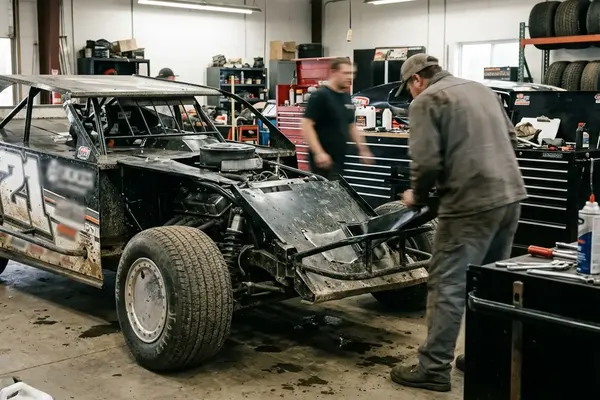
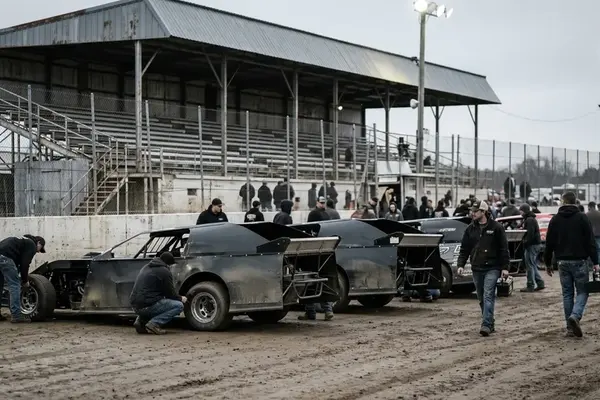
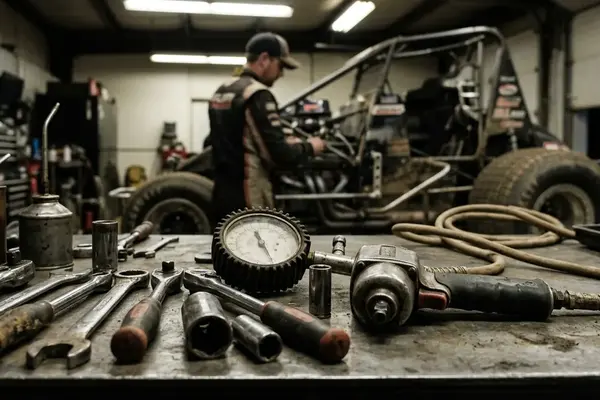
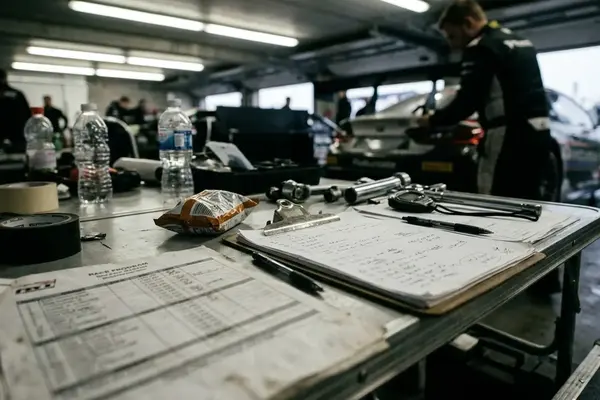
Friday light drops behind the grandstands at Rolling Wheels Raceway Park and the Sportsman pits already smell like hot oil and wet clay. A three-person crew works an open trailer on the Route 5 side of the grounds: one person knocks packed dirt from the radiator face, another sets cold tire pressures, the driver walks the wheel studs with a torque wrench before registration even opens. Between unload and the first call to staging, that window runs roughly 6:00 p.m. to 8:30 p.m. Everything that keeps the car alive has to fit inside it.
Contents
- The Friday Night Pit Reality
- The Proving Ground for Future Champions
- Family Teams and Grandstand Loyalty
- The Economics Keeping Car Counts High
- Structuring a Rookie Sportsman Campaign
The Friday Night Pit Reality
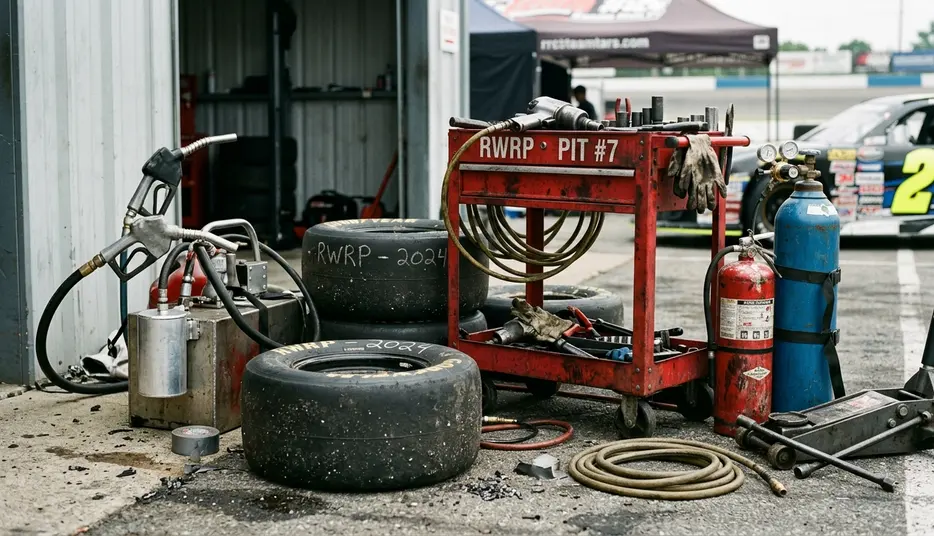
Big-Block haulers roll in with enclosed trailers, generators, and stacked shock racks. Sportsman teams show up with a floor jack, jack stands, a tire rack, fuel jugs, hand tools, spare steering pieces, and one or two mounted backup wheels packed into the tow vehicle and trailer footprint. The contrast is the point. Premier divisions own the headlines. The Sportsman class owns the weekly survival of dirt track racing in Central New York.
Crews triage by consequence. Clay packed into the radiator core can choke airflow inside a single hot-lap or heat session, so the face gets checked before every track appearance rather than saved for the feature. Wheel torque, tire pressure, fuel, tech, warm-up prep — all of it stacks into that same pre-race block. Miss one item and you are chasing the night instead of racing it.
Radiator First
Inspect the core from the engine side before you touch setup. A clogged radiator ends a night faster than a half-pound of tire pressure.
The Proving Ground for Future Champions
Most drivers arrive here after karts or micro-sprints, once starts, traffic awareness, and basic setup feedback start to repeat. The next step is a full-size modified chassis and a sealed crate package that sits near 350 horsepower on a common 602 pattern. Northeast Big-Block combinations can climb past 700. That gap changes how you drive.
Lower output forces momentum. You learn to carry corner speed, feed throttle without spinning the rears, and tell the crew what the car is doing in traffic. About the first 6–10 race nights should chase finished laps — practice, heat, feature, while you log tire pressures and chassis settings after every session. Wholesale setup swings early burn more nights than they save.
Setup notes earn their keep when you write them immediately and review them with the driver inside roughly 24–48 hours, while moisture, cushion location, and traffic still sit clear in memory. Success in Sportsman does not hand you a Big-Block ride. Struggle here, and moving up becomes a long shot. The division teaches the habits that higher horsepower will only amplify.
Family Teams and Grandstand Loyalty
Most Sportsman outfits run blue-collar and family-sized. The driver often doubles as chief mechanic. Work splits by who is free that night: one person owns tires and wheel torque, another watches fuel and cooling, someone else handles loading and the tow home. A three- or four-person crew covers driving, prep, chassis changes, damage checks, and travel without a dedicated full-time wrench.
Local fans know these names because the same people work the same towns during the week. That connection shows up in the grandstands and again in the pits after the feature. The busiest exchange of setup talk and borrowed parts lands in the around 20–40 minutes before cars load and tow vehicles leave. Mounted wheels, spacers, tie-rod pieces, ignition parts, fasteners, sheet metal, and setup measurements move between trailers. Sealed engine internals stay locked to the rulebook.
I have watched competitors loan a mounted wheel to the car that just beat them, then line up next week ready to take the spot back. That is the culture holding car counts together.
The Economics Keeping Car Counts High
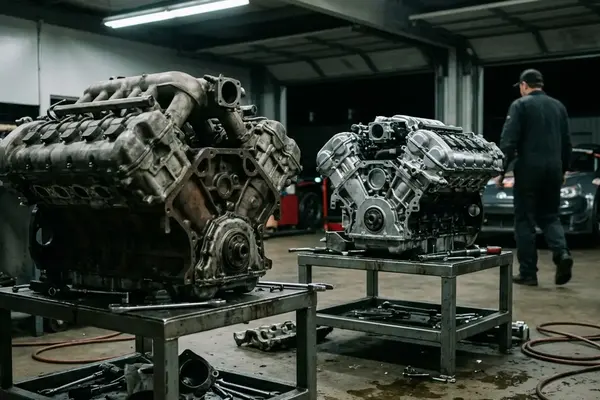
The crate package locks down one of the biggest performance variables: approved configuration, intact seals, restricted internals. Money that used to chase engine development can move toward tires, travel, and finishing races. Under many Northeast rule packages, tech focuses on casting and component ID, external seals, carburetor or induction limits, ignition controls, and minimum post-race weight.
Lap math favors the class. A car that transfers into a 20–25-lap feature, with 5–8 warm-up laps and an 8-lap heat, can bank 33–41 scheduled racing laps before cautions or consolations enter the count. That cost-to-laps ratio is why Sportsman so often fields the deepest grid on a given night at a weekly track — though participation still swings with local support-class strength, schedule conflicts, and tire or travel rules.
Seal Log Discipline
Record every engine session by date, track, oil, peak temperature, oil-pressure behavior, and laps completed. Unexplained temperature or pressure shifts beat a blind calendar rebuild every time.
One catch sits in plain sight. A sealed crate narrows engine spending; it does not standardize the full budget. Tire limits, approved fuel, tow distance, crash damage, entry fees, and local seal rules still move the cost per lap from track to track. A sealed crate also leaves room for well-funded teams to press advantages through newer chassis, shock testing, fresh tires, data work, or deeper spare inventories. Engine equality is partial equality.
Structuring a Rookie Sportsman Campaign
Start 12–16 weeks before your opener. Pull the current track and sanction rulebooks first. Mark the legal chassis generation, engine package, safety gear, tires, fuel, gearing, and weight. Then build the car against that list, not against a wish list from social media.
Chassis and Engine Sequence
- Verify chassis legality against the current book.
- Measure frame and suspension pickup points; inspect welds, steering, rear-end housing, brakes, hubs, and driveline.
- Inventory included shocks, springs or bars, gears, wheels, and body panels; price every missing safety and setup piece before you pay.
- Confirm the required crate pattern and seal authority; record seal locations and ID markings.
- Obtain service history and oil-pressure information; verify permitted carburetor, ignition, rev control, headers, and fuel.
- Test cooling and oil pressure on the ground before the first track lap.
Tire Program for Nights 1–6
Mount enough rubber for a legal race set plus replacements at the positions that wear fastest. Number every tire. Record circumference and pressure cold and hot. Log heat cycles and tread. Park the freshest legal tire on the highest-load corner instead of throwing a full new set at the car out of habit.
Weekly Maintenance You Can Copy
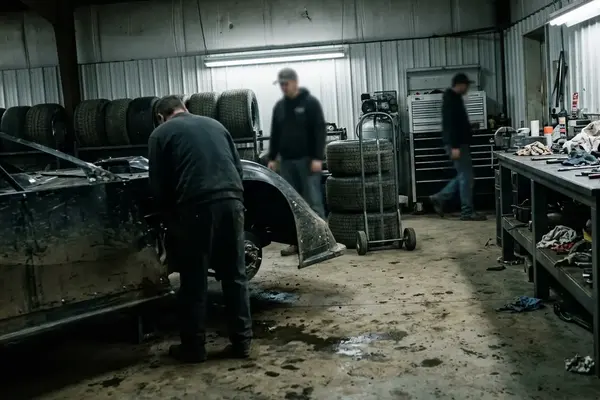
After every race night, before the trailer is buttoned up: strip packed mud, rinse the radiator from the engine side outward with controlled pressure, inspect hoses and the fan, clean suspension joints, check wheel and hub play, inspect steering and brake lines, and hunt cracked welds or bent brackets. Within 24–48 hours, inspect oil and filter as the rules allow, check plugs, verify throttle return and ignition wiring, examine valve springs and test spring condition on the interval the engine rules permit, lubricate service points, and fix bodywork that could kiss a tire.
Opener Blueprint
Copy this exact first-month path if you are rolling a used Sportsman into Rolling Wheels Raceway Park for the first time.
Worked case — Team Rooks, first Sportsman season, Central New York weekly schedule. Week −14: buy a used chassis after measuring pickups and rejecting a bent rear-end housing; price a full containment seat, belts, and a legal fuel cell before the seller gets a deposit. Week −12: take delivery of a sealed 602-pattern crate with photographed seals and a written oil-pressure history; mock up carburetor, ignition, and headers on stands and pressure-test the cooling system in the shop. Week −8: mount eight tires, number them 1–8, baseline cold pressures and circumferences, and assign two spares to right-rear duty. Week −4: scale the car on level pads, set cross-weight to a conservative starting point from the rulebook notes, and complete one open practice with no setup changes mid-session, only pressure and temperature logs. Race night 1: unload at 6:05 p.m., clear the radiator, torque wheels, set pressures, pass tech, run warm-up, heat, and feature without changing a spring or bar; write the full note sheet before leaving the property. Race nights 2–6: change one variable per night when the notes demand it, reserve the best-condition legal right-rear for the feature, and run the post-race wash-and-inspect list before the trailer doors close. By night 6 the binder holds pressures, temps, finish positions, and two borrowed-spacer favors repaid in the pits. That sequence is the campaign in miniature, legal car, sealed power, logged tires, finished laps, and a maintenance rhythm you can repeat every Friday the schedule lights up.