Contents
- The Pre-Race Advantage
- The Pit Gate Hustle: Registration and the Heat Draw
- Timing the Hot Laps: Data Collection Over Speed
- Navigating the Heat Races: The Math of Qualifying
- The Consolation Bracket: Survival and Turnaround
- Feature Event Execution: The Final Countdown
The Pre-Race Advantage
Winning a dirt-track feature isn't about mastering the final 30 laps; the working advantage comes from ruthlessly managing the six hours before the green flag drops.
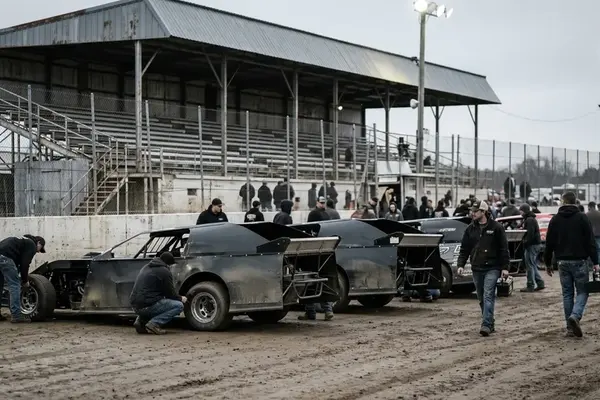
Fans see the heat winners, the cushion pounding and the last-lap charge. Crews spend the afternoon fighting a quieter opponent: the clock. Parking, registration, inspection and staging decisions accumulate long before a 358-Modified rolls onto the racing surface.
A typical race-day window runs roughly five to seven hours when the pits open in late afternoon and the feature lands at night. That range is useful for planning crew workload, although the track's posted gate, draw-closing, hot-lap and race-start times control the actual schedule. Building around an assumed feature time invites rushed work later.
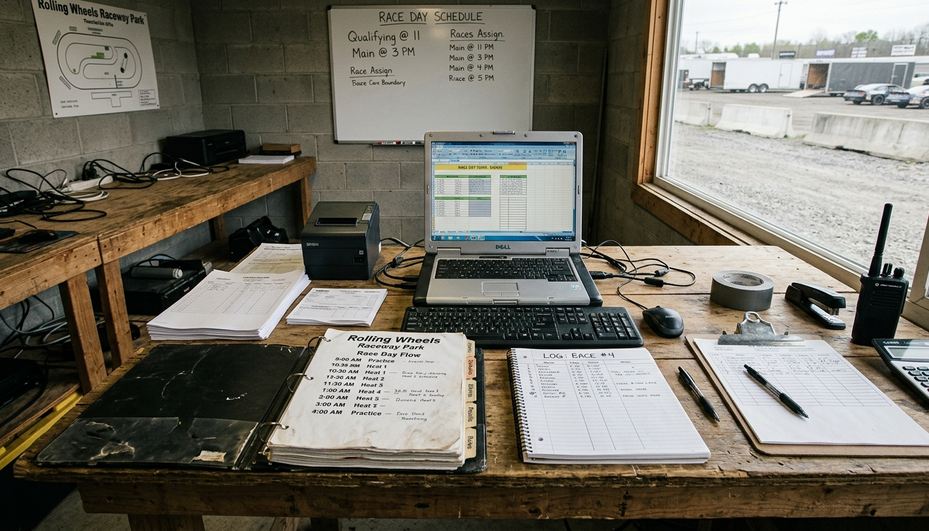
I map the day through seven checkpoints: pit entry, registration and draw, unloading and inspection, hot laps, the heat race, a consolation if required, and feature staging. Each checkpoint has a trigger, a short task list and one person watching the race order.
Build From Triggers
- Hauler parked: Verify the exit path, working-side clearance, route to staging and nearby service locations.
- Registration open: Send one prepared crew member while unloading begins.
- Hot laps called: Record the baseline and define the question the driver needs to answer.
- Heat lineup posted: Confirm the start, transfer line and possible consolation route.
- Feature lineup posted: Count remaining races and begin the final service sequence.
Run The Clock
Treat every posted deadline as an operational checkpoint. The feature becomes easier to manage when the afternoon never gets away from the crew.
The Pit Gate Hustle: Registration and the Heat Draw
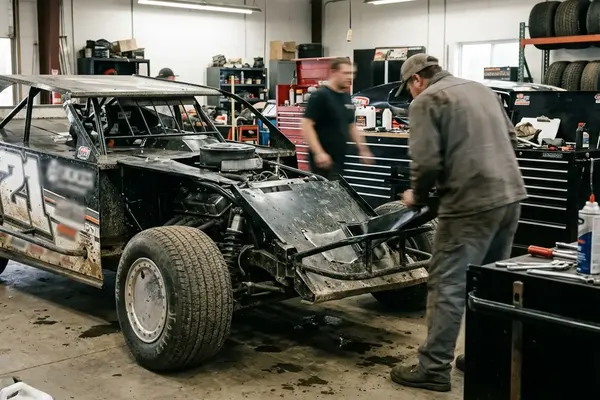
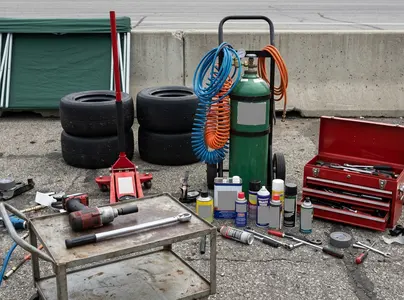
The first meaningful choice happens before the ramps come down. The crew chief should select a pit stall that leaves a safe hauler exit, enough space beside the working side of the car and a clear path toward staging. Air, water and other service locations also belong in that scan.
A convenient-looking stall can create a long night if another hauler blocks the exit or the car must weave through active pit traffic for every staging call. At a busy program along Route 5, a shorter safe staging route saves attention as much as time.
Send Registration Ready
The registration runner should carry the driver name, car number, division, required credentials, payment method and any information connected to track-issued scoring equipment. One missing item creates a second trip across the pits while the unloading crew waits for confirmation.
Plan to complete registration and the pill draw 30 to 60 minutes before the posted hot-lap time. The published draw-closing time remains the hard deadline. A missed draw can send the car to the rear of its heat or trigger another track-defined penalty, wiping out the strategic value of the original draw before the driver turns a lap.
The draw establishes a starting position or feeds the night's lineup procedure. Record the result immediately. Then verify it against the posted lineup rather than relying on memory or a conversation at the window.
Bulletin Sets Priority
Northeast dirt-track procedures vary by track, division and sanctioning format. The current pit bulletin, drivers' meeting and posted lineups supersede general guidance on draws, lateness, handicapping and inspection.
That qualifier matters. A Rolling Wheels Raceway Park program can use different transfer counts, inversion rules or consolation placement depending on the division, car count and that night's format.
Timing the Hot Laps: Data Collection Over Speed
Hot laps produce information. The stopwatch supplies one part of it, while the driver reports where the car enters, rotates and drives forward.
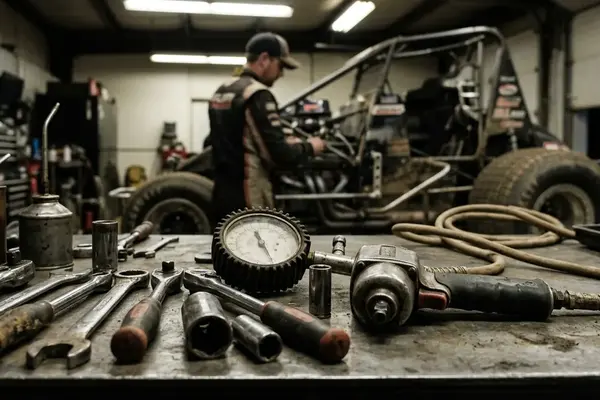
Before staging, record cold tire pressures, basic shock or suspension settings, fuel load and one test question. Keep the question narrow: Does the car hold entry when the driver lifts, or does it lose forward bite when throttle returns? A three-to-five-lap session cannot cleanly answer a stack of unrelated setup questions.
Use Every Phase
- In the chute: Confirm the intended test and watch how long the group sits.
- First lap: Bring the car and tires toward working condition.
- Remaining laps: Compare entry, center and exit at both ends of the track.
- Back at the hauler: Capture the driver report and hot pressures within two to four minutes.
Opposite ends can behave differently because of shade, banking, water application and traffic. “Loose” alone tells the crew too little. “Free on entry into one, planted at center, spinning the right rear off two” gives the crew a location and a phase to address.
The debrief needs to happen before memory blurs and tire temperatures fall materially. One person records. Another checks pressures. The driver speaks before hearing the crew's theory, which keeps the first report clean.
Protect The Baseline
A familiar failure begins on dark, heavily watered clay. The car feels fast, so the crew makes several suspension and pressure changes. By the heat, the surface has polished. Forward bite disappears, and nobody can isolate which change moved the car in the wrong direction.
Preserve the baseline when hot laps happen on a visibly dark, tacky surface. Prepare a separate heat-race adjustment for the likely change in clay rather than stacking multiple moves onto one short run.
One Test Question
Write the question before the engine fires. If the driver cannot answer it after the run, retain the baseline and use the surface notes to plan the next adjustment.
Navigating the Heat Races: The Math of Qualifying
Once the anthem and final pre-race ceremonies end, clock-based planning gives way to race-order planning. Cautions, false starts and track work can stretch one heat while a clean race disappears in minutes.
Put the heat assignment, starting position, direct-transfer count, redraw eligibility and consolation destination on one board or phone screen. Every crew member should be able to see the same race math before the car leaves the pit.
Read The Transfer Line
Suppose five cars transfer. A driver running fifth protects the last direct berth. A driver running sixth must gain a position or accept the consolation route. Those positions may sit only a car length apart, yet they demand different levels of risk.
A redraw position can justify pressing forward when the car has clean air and a workable lane. If the next move requires wheel contact or a low-percentage slide job, the value of the redraw must be weighed against bent steering, a cut tire or a trip to the B-Main. Inversion and handicapping rules can change that calculation, so confirm the night's format before discussing tactics.
Stage By Sequence
Report on the first staging call and stay ready through the preceding heat. Arriving very early can leave the car sitting as tire temperature drops. Arriving late risks missing the push-off or forcing the crew into a hurried departure.
Use the final three to five laps of the preceding heat as a live track report. Watch the top, middle and bottom. Mark where right-rear tires begin to spin, where a cushion develops and where corner entry turns polished. The driver needs a concise update, preferably one lane choice for the start and one fallback if traffic closes it.
The Consolation Bracket: Survival and Turnaround
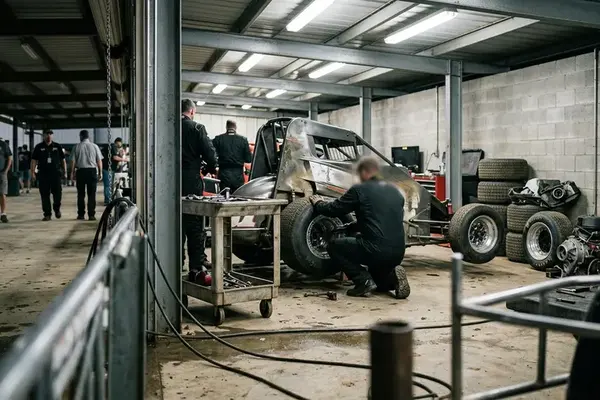
A missed heat transfer starts the triage clock at the checkered flag. The workable turnaround may be only six to ten minutes, so the crew needs assignments before the car reaches the pit.
The driver reports contact, vibration, steering position, brake feel and engine response. Separate crew members handle fuel, the driver's sightline, packed mud and pressures. One person watches the lineup and staging call continuously; running engines can bury the public-address system.
Service In This Order
- Receive the driver's report.
- Check every lug nut by touch or tool.
- Inspect tie rods, steering links, wheels, brake lines and fuel lines.
- Confirm that bodywork cannot contact a tire.
- Add the planned fuel and clean the driver's tear-offs or sightline.
- Remove packed mud and verify tire pressures.
- Move when staging calls the field.
Major setup swings consume time and introduce new uncertainty. Change the item tied directly to the driver's report, then get the car ready to race. Stop setup work at the staging call unless the race director grants time for a documented safety repair.
Safety Holds Position
Lug nuts and steering components stay on the checklist under every time pressure. A transfer spot never outweighs a missed wheel or steering fault.
Feature Event Execution: The Final Countdown
The final hour starts with the lineup and the number of races still ahead. Premature staging leaves the car sitting while tires cool and pressures drift. Use the available 45 to 60 minutes deliberately.
Close The Preparation Loop
- Verify the feature lineup and remaining race order.
- Calculate fuel for feature laps, warm-up, cautions and restarts.
- Confirm the fuel result against tank capacity instead of estimating by sight.
- Adjust pressures for a surface that has likely widened and slicked off.
- Inspect wheels and steering again.
- Prepare tear-offs and complete the driver briefing.
Recheck hot-pressure targets 10 to 20 minutes before the expected staging call. Repeatedly bleeding a cooling tire while the car waits can pull the setup away from the target that matters under racing load.
The feature also changes the driver's time horizon. Heat races reward immediate track position. A 30-lap main asks the driver to preserve a usable right-rear tire while traffic and lane quality evolve.
Race In Thirds
During training sessions, divide the plan into laps 1 to 10, 11 to 20 and 21 to 30. The opening third establishes position without spending the tire in every side-by-side exchange. The middle third tracks changing grip and identifies where traffic can be cleared. The final third releases whatever pace remains.
That plan should fit on the same board used for the heat math: starting spot, preferred opening lane, pressure target, fuel confirmation and the trigger for changing grooves. The crew has spent the afternoon protecting clean decisions. The driver now converts them into 30 measured laps.
When the feature reaches lap 20, will your car still have the tire and balance needed to attack?