The Roar That Defined a Region
The Super DIRTcar Series sits at the top of Northeast big-block modified racing because it asks the old question in the hardest possible way: who can make a high-output, open-wheel dirt modified work when the clay changes under every lap?
Central New York gave that question a home. Not just one track. A corridor.
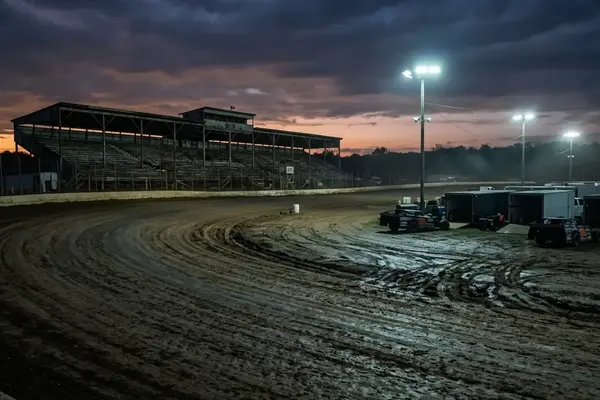
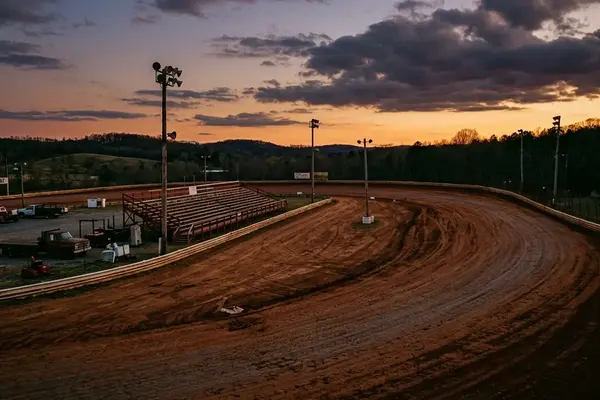
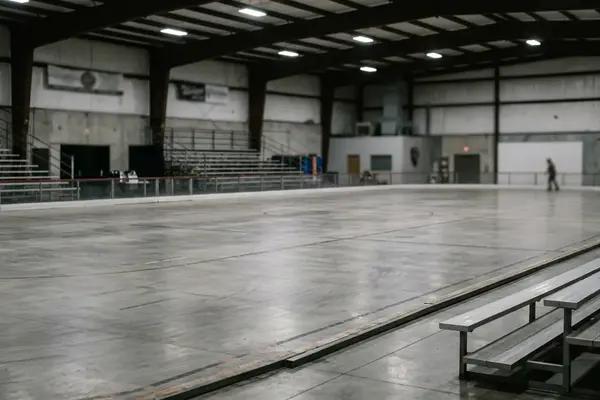
Elbridge, Weedsport, Fulton, Brewerton, Vernon, and Canandaigua formed a dense racing footprint, with teams hauling along familiar roads, comparing notes in diners, and measuring themselves against the same hard-nosed competition week after week. Rolling Wheels Raceway Park, tied to Elbridge, New York, and historically known as a 5/8-mile clay oval, became part of that larger Northeast dirt modified memory. Route 5 was not just pavement to the gate. It was the approach to a regional argument about horsepower, nerve, and clay.
Why Big-Block Modifieds Became the Reference Point
A big-block modified is not a stock car with the fenders trimmed away. It is a purpose-built dirt weapon: open wheels, tube-frame thinking, a high-output V8, adjustable suspension, and tires chosen for clay that may start heavy and end polished slick.
That matters because the Super DIRTcar Series did not replace every weekly show, invitational, or local championship in the Northeast. It became the reference point for premier big-block modified competition. That distinction keeps the history honest.
Key Takeaway: Central New York mattered because it supplied the full recipe at once: clay ovals, experienced racers, loyal fans, towable distances, and enough rivalry to make a touring identity feel inevitable.
From the archive table, I keep coming back to one principle: core rules change, equipment improves, but dirt racing endures because the surface never stops arguing back.
The Early Days of Dirt-Track Dominance
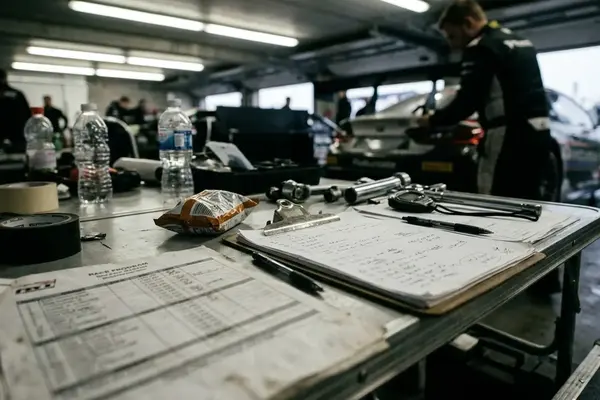
The story starts smaller than the modern tour. It starts with weekly programs, special events, handwritten notes, old race programs, promoter files, newspaper clippings, track score sheets, and veteran accounts that still carry the smell of clay dust.
Organized Northeast dirt modified racing grew out of local clay ovals before the touring format became the main frame of reference. By the 1970s, the DIRT-era organizing model took shape, and Central New York tracks became central stops for modified teams chasing higher-profile races beyond ordinary Saturday-night points.
From Weekend Shootouts to a Unified Circuit
The early structure was practical. A strong weekly team wanted bigger purses, tougher fields, and more chances to build a name. Promoters wanted cars that could pull a crowd. Fans wanted to see whether the local hero could handle the invader from the next county over.
That pressure created a bridge between local pride and regional competition. The modern Super DIRTcar Series identity grew from that bridge, not from a clean line drawn on a calendar.
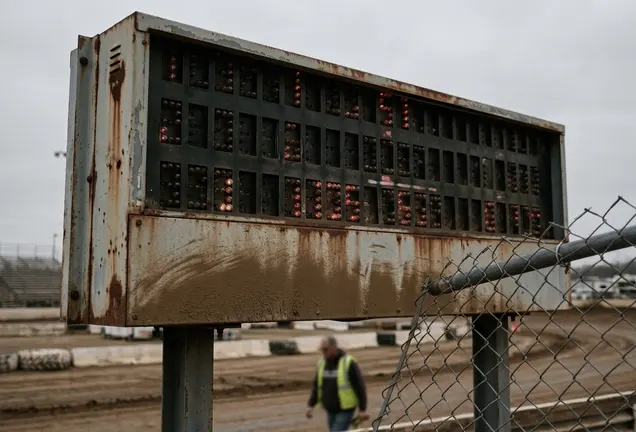
- Weekly clay ovals developed the drivers, owners, and crews.
- Special events tested teams against unfamiliar competition.
- Central New York tracks gave racers a practical route between major modified communities.
- Promoter records and preserved programs connected scattered race nights into a readable pattern.
Reading the Record Without Sanding Off the Edges
Here is where the historian has to tighten the belts. Primary-source material from the 1960s and 1970s can conflict. Car counts, heat-race lineups, and finishing orders may differ between a program, a clipping, and a veteran’s memory.
That does not make the record useless. It makes the source work more important.
Warning: Do not claim exact historical car counts or attendance figures unless they come from a dated race program, official result sheet, promoter record, or archived news report.
The useful research window for this foundation runs from around 1969 into the mid-1980s, spanning Rolling Wheels Raceway Park’s early operating era and the broader move toward a unified Northeast dirt modified circuit. Because much of this record comes from surviving programs and firsthand accounts, the cleanest conclusions are about patterns, dates, names, and relationships, not every last finishing position.
Good archive practice is plain work. Save the program. Date the photograph. Keep the car-owner name. Preserve the sponsor listing. Write down whether a source came from a track office, a family scrapbook, or a newspaper file. Even a media credit line such as Tom Skibinski: DIRT NorthEast PR Director can help future readers understand where a document came from.
Technological Shifts in Big-Block Modifi
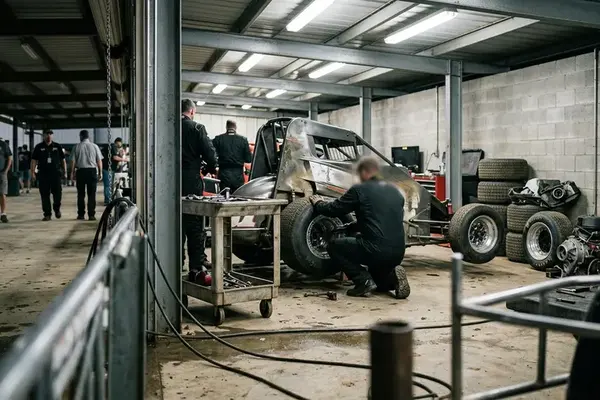
Technology in modified racing rarely arrives as theory first. It arrives because the car will not turn in the middle, the right rear is wearing out, the driver cannot see through traffic, or the engine freshening schedule has become a guessing game.
Chassis and Suspension: Make the Car Rotate
Early modifieds carried more stock-derived thinking. Over time, the division moved toward purpose-built tube-frame cars with center-steer layouts, full roll cages, adjustable rear suspension, and bodies shaped for dirt-track visibility and quick service.
The big change was not one part. It was adjustability.
- Start with the track state: heavy, tacky clay or dry-slick surface.
- Choose spring rates and shock valving that match how the car needs to load.
- Set stagger and rear bite for rotation without making the car snap loose.
- Move ballast and adjust bar angles as the groove changes.
- Recheck the setup after hot laps, because the first read may be gone by feature time.
A setup that works on a moisture-rich surface early in the night can be wrong after the track slicks off and rubber builds in the groove. That is not bad luck. That is dirt racing doing exactly what dirt racing does.
Engines: From Garage Ingenuity to Repeatable Precision
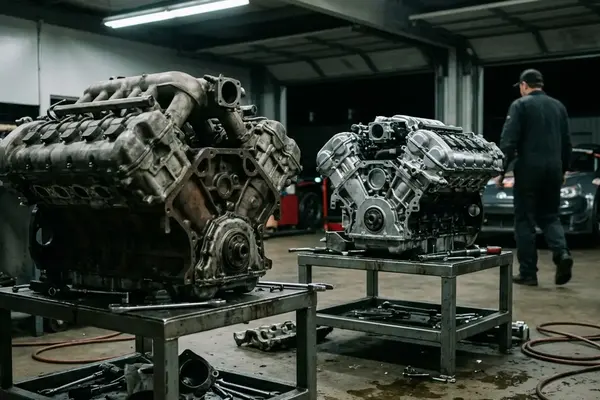
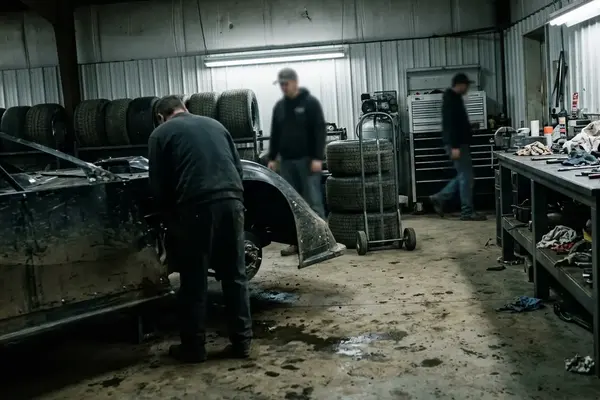
Big-block modified engine work shifted from local machine-shop and garage-built combinations toward specialized programs. Tighter machining tolerances, repeatable dyno testing, and lap-based maintenance schedules changed how teams planned a season.
The old garage culture still matters. So does precision. The best teams respect both.
During practice, a crew chief learns quickly whether the engine, gearing, and throttle response match the surface. Too much hit can burn the rear tires. Too little response can leave the driver waiting while the field drives away off the corner.
Tires: The Quiet Clock on Every Feature
Tire technology changed race management because the tire is the only part of the car arguing directly with the clay. Compound selection, grooving, siping where permitted, stagger, and air pressure all shape short-run grip and long-run survival.
This is where common mistakes show up fast:
- Chasing early grip without thinking about late-race wear.
- Copying another team’s stagger without matching its chassis balance.
- Ignoring how quickly the surface is taking rubber.
- Confusing a fast hot-lap feel with a feature-length setup.
Pro Tip: Track your setup notes by surface condition, not just by venue. Rolling Wheels Raceway Park on heavy clay and the same oval after the groove slicks off are two different problems.
For rule boundaries, teams should read the official Super DIRTcar Series regulations rather than rely on pit-lane summaries. Tech language matters when performance and legality meet.
Fueling the Local Motorsports Community
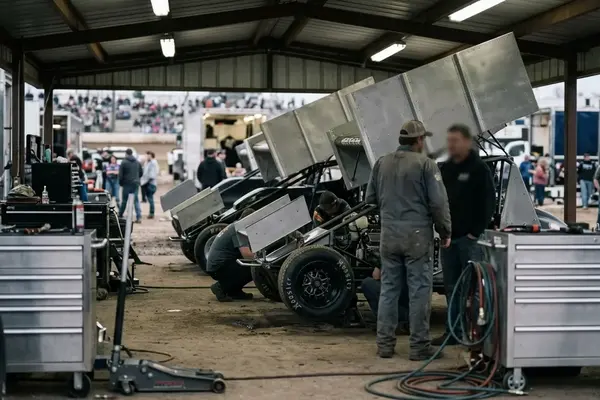
A major modified show activates more than the racing surface. Pit gates open. Tow rigs roll in. Grandstands wake up. Concession workers, local diners, fuel stops, motels, parts suppliers, photographers, safety crews, push-truck operators, officials, and track-prep workers all become part of the night.
That is the community impact people miss when they reduce a race to the feature winner.
The Town Around the Track
Rolling Wheels Raceway Park’s Elbridge location placed it within practical towing distance of multiple Central New York modified communities. That geography mattered. A track becomes a hub when enough teams can reach it, enough fans know the road, and enough local businesses feel the pulse of race night.
Community observation suggests that dirt modified culture survives through repetition. Same family in the same grandstand section. Same uncle checking stagger. Same former driver now helping a younger relative back the car out of the trailer.
That generational chain is not sentimental decoration. It is the labor system of the sport.
Families, Crews, and the Long Memory
Northeast dirt modified racing carries family-owned cars, parent-child pit crews, multi-decade fan habits, and former drivers returning as owners, crew members, officials, or sponsors. The names on the door panels may change. The work rhythm feels familiar.
A 358-Modified program may share some of that culture, but it should not be folded carelessly into the big-block tour story. Divisions have their own rules, economics, and ladders of ambition. Respecting those boundaries makes the community history stronger.
What Race Nights Teach
Race night teaches that a track is not only a venue. It is a meeting place with clay at the center.
- Crews trade practical knowledge while still protecting speed secrets.
- Fans preserve history through ticket stubs, photographs, programs, and stories tied to specific nights.
- Local workers make the event possible before the first green flag.
- Young racers learn the sport by carrying tires, scraping mud, and listening more than talking.
That last part matters most. Dirt racing renews itself when the next generation learns why the old habits existed before deciding which ones to keep.
Preserving the Legacy and Looking Ahead
The future of Northeast dirt racing does not need nostalgia alone. It needs preservation with grease under its fingernails and modern safety standards in its toolbox.
Central New York has a dense concentration of dirt modified history. Rolling Wheels Raceway Park is part of that regional memory. The Super DIRTcar Series remains the reference point for premier big-block modified competition in the Northeast. Those three facts give the story its backbone.
What to Preserve Now
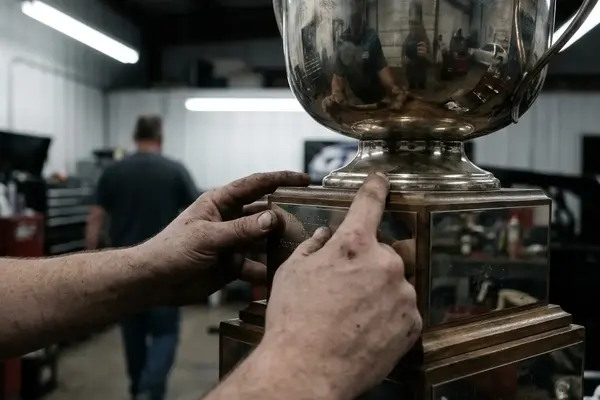
The next stretch, from around 2024 toward roughly 2030, should be an archive-building era. Not someday. Now, while people still remember who owned the car, who lettered the body, and which race night the photograph actually shows.
- Scan dated race programs and keep the covers with the inside pages.
- Attach location and date metadata to photographs.
- Save driver rosters, car-owner names, and finishing orders together.
- Record firsthand interviews tied to specific race nights, not vague eras.
- Keep notes on source conflicts rather than forcing false certainty.
This work is not glamorous. It is essential.
What to Embrace, What to Avoid
Modern cars carry safety expectations that early modified racers did not have in the same form: engineered roll cages, containment seats, head-and-neck restraint use, fire-resistant gear, improved belts, and more formal technical inspection. Performance advanced too, but safety is the line the sport has to keep drawing darker.
Avoid the trap of treating modernization as betrayal. The old racers adapted constantly. Chassis, tires, engines, trailers, communication, documentation, and inspection all changed because the sport kept asking better questions.
Also avoid flattening the past into one tour, one track, or one hero. Weekly racing, invitationals, local championships, and the Super DIRTcar Series all shaped the Northeast modified world in different ways.
The Road Forward
The future belongs to tracks and communities that can hold two ideas at once: preserve the record, and keep improving the race night. Better archives help fans understand what they are watching. Better safety practices help drivers keep coming back. Better respect for division history keeps the story clean.
The roar that defined Central New York has never been only about noise. It is memory, machinery, family, and clay moving under the right rear.
That is why the Super DIRTcar Series still matters here. The region did not just host races. It helped build the language of Northeast big-block modified competition, one race night at a time.