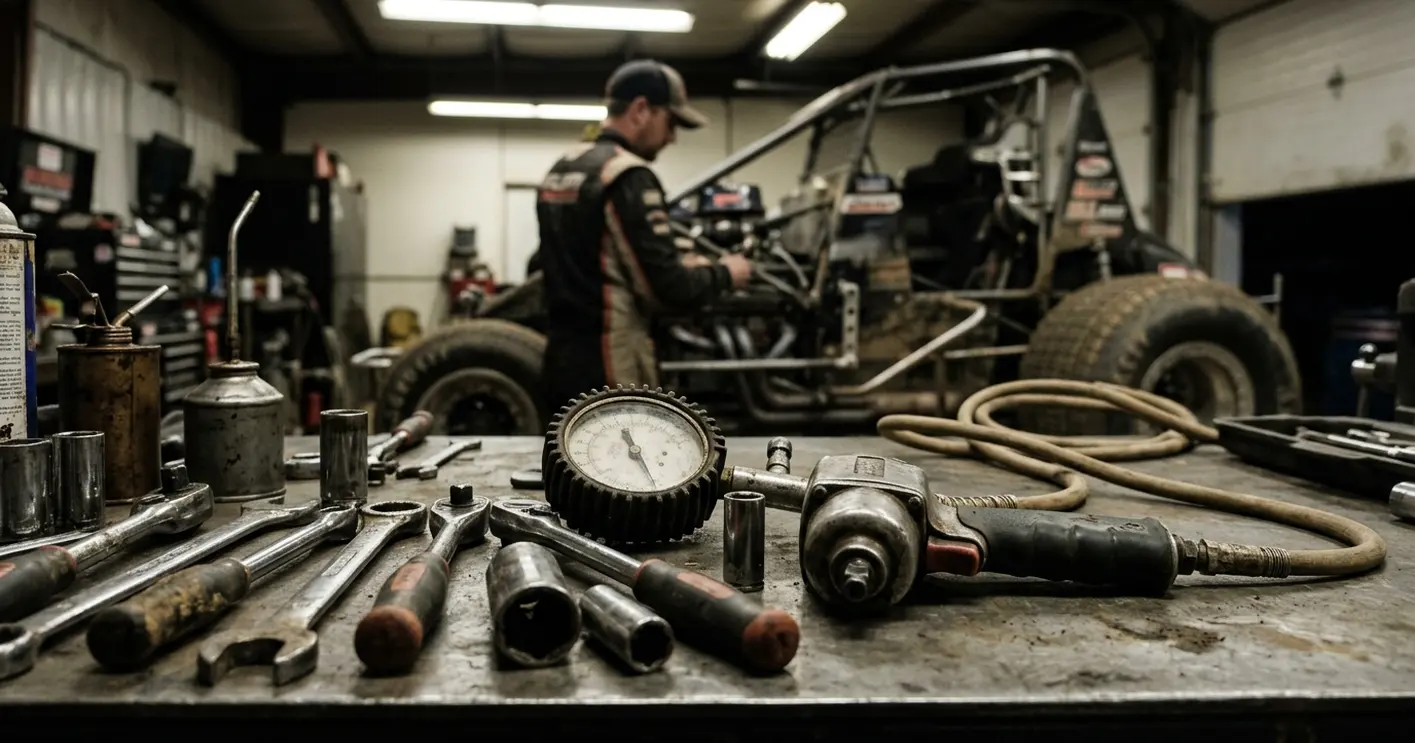
The Roar of the Outlaws at Rolling Wheels
Why this pairing still feels bigger than a normal race night
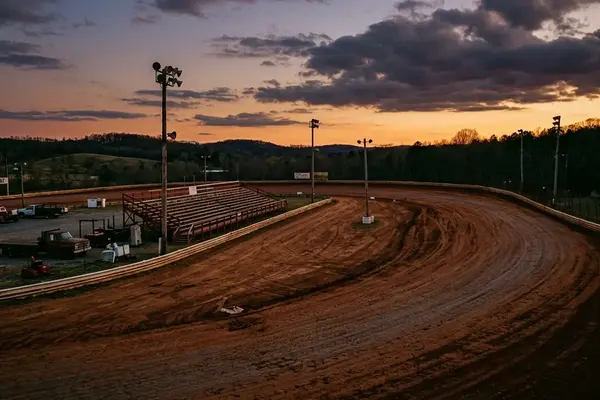
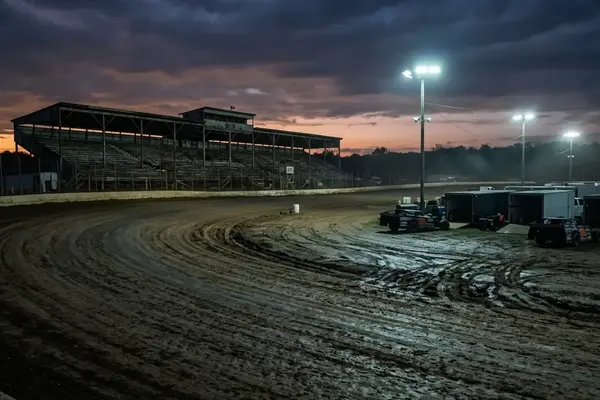
Rolling Wheels Raceway Park gives winged sprint cars room to breathe. That is the first thing a results reader should keep in mind before judging any highlight from an Outlaw stop in Central New York.
The track is a roughly 5/8-mile semi-banked oval, about 0.6 mile per lap, and that shape changes the whole rhythm of the show. A driver does not simply stab the throttle and hope the cushion holds. The car has time to build momentum, the wing loads up, and the corner entry becomes a long commitment instead of a quick flick.
That is why appearances by the World of Outlaws Sprint Car Series carried such weight at Rolling Wheels. In the sponsor-era archive language, World of Outlaws STP Sprint Cars brought the premier national touring sprint-car field onto one of the Northeast's broadest dirt stages. The result was not a small-track bullring fight. It was speed, air, dirt, and timing stretched across a big oval.
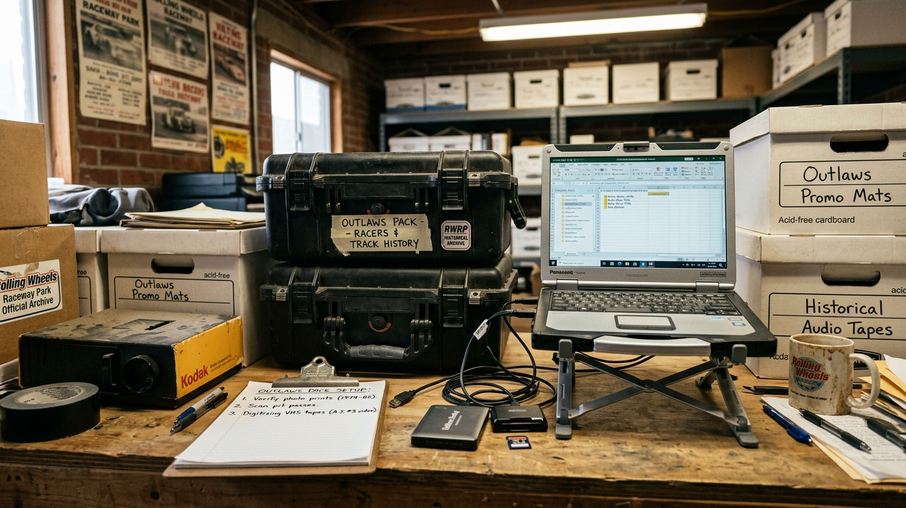
What the crowd actually sees
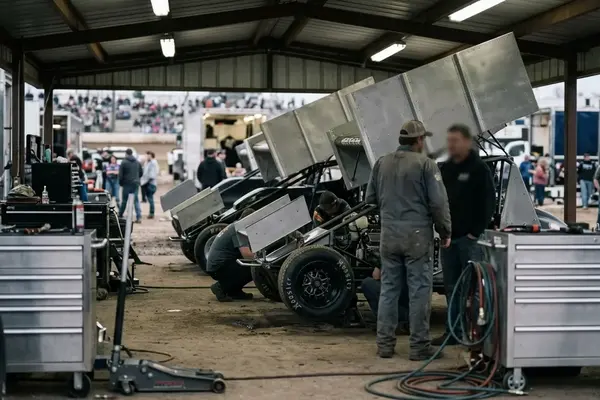
The cars are high-speed, open-cockpit, winged sprint cars. From the grandstand, the top wing looks like the headline. From the result sheet, the key is how that wing lets the driver attack the long straightaway and still rotate the car through the corner.
Fans often say the loudest cheer comes before the A-Main even starts. Time trials and qualifying races tell the crowd who has raw pace. The feature tells everyone who can carry that pace when traffic, track condition, and starting position all pile onto the same lap.
Track read: At Rolling Wheels, the size of the oval makes the Outlaw sprint-car package feel fully stretched out. The results should be read with that track profile in mind.
Kings of the Dirt: Kinser and Schatz
Kinser as the benchmark
Steve Kinser is the cleanest benchmark for Rolling Wheels Outlaw history because the numbers around him are not subtle. He is credited in archive notes as a 20-time World of Outlaws series champion, a 12-time Rolling Wheels winner, and the owner of 34 victories in New York.
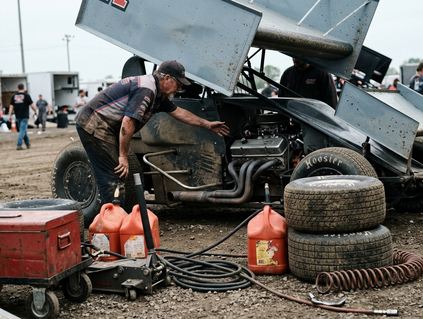
Those marks explain the nickname without dressing it up. Kinser's 522 career A-Main wins support the King of the Outlaws label in the plainest possible way: he won the race that mattered, over and over, in the series where the A-Main carries the headline result.
The Budweiser Salute to the King Outlaw Showdown fits that archive framing well. It was not just a clever event label. It pointed to a period when Kinser's presence at a place like Rolling Wheels gave the night a measuring stick. If a local runner, a rising touring driver, or a rival team wanted to know where they stood, Kinser provided the answer.
Schatz and the next pressure point
Donny Schatz brought a different kind of pressure. Car 15, tied here to Tony Stewart Racing, had Rolling Wheels victories in 2004 and 2006 and carried the profile of a multi-year points leader. Schatz did not need the Kinser mythology to matter. His results already forced the field to treat him as the driver most likely to turn a good night into a decisive one.
That contrast helps when reviewing old finishing orders. Kinser reads like the all-time reference point. Schatz reads like the modern standard inside that later archive window. Joey Saldana, when tied to Kasey Kahne Racing, and Daryn Pittman add more national-level depth to the field, but Kinser and Schatz frame the conversation because their Rolling Wheels notes connect directly to wins, points pressure, and the headline feature.
Archive tip: When sorting historical race notes, separate career legacy from event-night form. Kinser's full record explains the aura; Schatz's Rolling Wheels wins explain the immediate threat on those nights.
Milestones and Record-Breaking Runs
Start with July 1980, then move forward
The Rolling Wheels World of Outlaws sprint-car story in this archive starts in July 1980, when Lynn Paxton captured the inaugural Outlaw Sprint Car A-Main at the track. That is the baseline. Everything that follows, from Kinser-era highlights to later time-trial references, should be placed after that first A-Main marker.
This sequence matters because sprint-car history can get messy when sponsor names, event names, and division records sit beside each other on the same page. The safe method is chronological first, division second, and headline result third.
Speed records need clean labels
Craig Dollansky belongs in the speed discussion as a named fast-time trialer and track-record reference for the sprint-car side when the supporting archive entry identifies that mark. His role in the notes is useful because time trials show a different kind of performance than feature wins. One lap can reveal raw balance. The A-Main reveals whether that balance survives traffic.
Billy Decker's historic track record from September 15, 2006 also belongs in the Rolling Wheels record conversation. It should not, however, be treated as a World of Outlaws sprint-car lap record unless the original archive entry says so by division. Decker is central to the Northeast dirt-track record book, but the division label does the heavy lifting here.
That qualifier is not paperwork fussiness. For this topic, the approach has to stay division-first because a Rolling Wheels card could include sprint cars, Big-Block Modifieds, 360 sprint cars, Sportsman Modifieds, and other modified-style notes. Mixing them creates a result that sounds exciting but reads wrong.
Record check: Do not merge sprint-car fast time, Big-Block Modified track records, and support-division results into one record line. Rolling Wheels history is strongest when each division keeps its own lane.
Qualifying Drama and Race Formats
The race-night order
The clean way to follow a Rolling Wheels Outlaw program is to read it in the same order a crew experiences it. Start with qualifying. Then track the races that set or rescue starting positions. Only after that should the A-Main result take over the headline.
- Integra Shocks Time Trials: The qualifying sequence begins here in the posted event structure. This is where raw single-car speed establishes the first sorting point.
- Dash: The Dash is a short race used to help determine front starting positions for the A-Main, depending on that event's posted rules.
- B-main: The B-main is the consolation race. It transfers remaining eligible cars into the A-Main field.
- A-Main: The A-Main is the primary feature race. This is the result that determines the headline winner.
That order keeps the night understandable. A driver can look electric in time trials and still have work to do. Another driver can salvage the program through the B-main and become a story before the feature ever goes green.
Where people misread the sheet
The most common mistake is giving every line the same weight. Fast time is not the same as winning the A-Main. A Dash result is not the final finishing order. A B-main transfer is not a feature podium. Each line answers a different question.
- Time trials ask: Who has immediate pace?
- The Dash asks: Who controls the preferred front-row or front-pack opportunity under that event's rules?
- The B-main asks: Who can still fight into the show?
- The A-Main asks: Who finished the job?
The Syracuse 200 hook
The Win-and-You're-In format added another layer of pressure because the victor secured a starting spot in the Syracuse 200 at the New York State Fairgrounds. That changed how the result felt. The winner did not just leave Rolling Wheels with a trophy and a headline; the win carried a bridge into another major Northeast dirt-track stage.
During practice, teams tend to chase comfort first. In this kind of format, comfort is not enough. The driver needs a car that can qualify, race in clean air, and still respond when the surface shifts under feature conditions.
For fans, the troubleshooting is simple: if a favorite starts deeper than expected, look backward through the qualifying sequence before blaming the feature alone. The answer often sits in time trials, the Dash draw, or the need to come through a consolation race.
Support Divisions and Local Challengers
Big-Block Modifieds set the local tone
The support card made these nights feel like a Northeast dirt-track gathering, not just a national tour passing through Route 5 country. Big-Block Modifieds sit first in that conversation because they are a premier open-wheel support division on these cards.
That matters at Rolling Wheels Raceway Park. The crowd understands modified racing. The shape of the track suits big momentum, and the local knowledge around surface change, entry angle, and traffic has been built over years of watching modified teams work.
Other support classes need their own result lines
The Patriot Sprint Group belongs in the support coverage as a 360 sprint-car group, based on engine displacement. That distinction separates it from the headline World of Outlaws sprint-car field. The Mr. DIRTcar Sportsman Modified Series also belongs in the support-card coverage, not in the headline sprint-car results.
That may sound basic, but it prevents a lot of archive confusion. A 358-Modified note, a Sportsman Modified result, a 360 sprint-car appearance, and a World of Outlaws A-Main should not be blended into one finishing order. Archive language from Tom Skibinski, DIRT NorthEast PR Director, often made those separations clear because the local readership cared about the difference.
Home turf still matters
Steve Paine and Gary Tomkins give the local and regional side of the story a backbone. They can be framed as standouts defending home-track territory against national touring drivers, especially when the card placed Big-Block Modified strength beside the traveling sprint-car spotlight.
This is where Rolling Wheels race nights earn their community pull. The national names bring the big trailer row and the series points pressure. The local and regional names bring the grandstand arguments, the pit-gate familiarity, and the feeling that Central New York is not simply hosting the show. It is testing the show.
A Lasting Legacy in Northeast Motorsports
What the results preserve
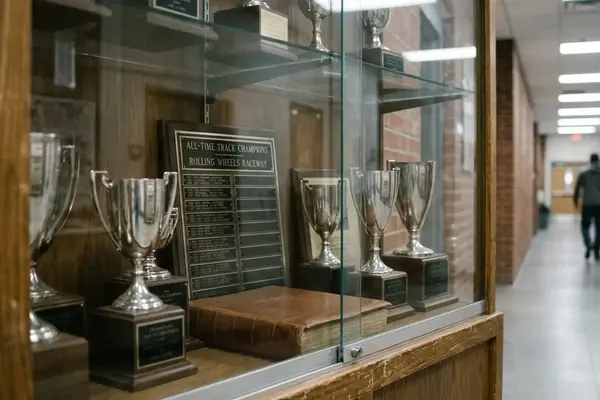
The historical range in these notes runs from Lynn Paxton's July 1980 inaugural Outlaw Sprint Car A-Main through at least Billy Decker's September 15, 2006 track-record marker. Between those points, Rolling Wheels built an archive that connects national sprint-car names, modified strength, and support-division depth.
The legacy does not rest on one driver alone, even with Kinser's towering record and Schatz's later Rolling Wheels victories. It rests on the combination: World of Outlaws sprint-car A-Mains, Big-Block Modified support, Patriot Sprint Group appearances, and Mr. DIRTcar Sportsman Modified Series activity all sharing the same broader dirt-track calendar.
How to read the highlight reel now
For race-results work, the best approach is steady and simple. Identify the division. Confirm whether the line refers to time trials, a qualifying race, a consolation race, or the A-Main. Then place the result into the Central New York and broader Northeast circuit where Rolling Wheels carried real historical weight.
That method keeps the roar attached to the record. It lets Kinser remain the King, Schatz remain the Car 15 threat, Paxton remain the first Outlaw A-Main winner at the track, and Decker remain part of the Rolling Wheels record conversation without forcing every achievement into the same bucket.
Rolling Wheels Raceway Park has always been at its best when the dirt tells more than one story at once. The Outlaws supplied the national thunder. The modifieds and support divisions kept the local pulse strong. Together, they made the track a serious landmark in Northeast motorsport memory.