Setting the Stage for Northeast Dirt Racing
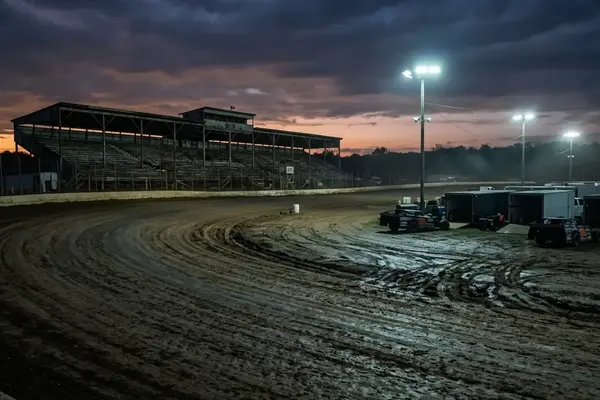
Ask anyone who walks the infield at Rolling Wheels Raceway Park where the real story lives, and they'll point you toward the people tracking schedules, division messaging, and sponsor visibility week after week. Tom Skibinski sits at that exact intersection. As DIRTcar Racing NorthEast PR Director, he watches the moving parts most fans never see, which makes him the source of record for the state of Northeast dirt racing.
This conversation works as an interview because Skibinski doesn't deal in hype. He deals in calendars, points columns, and the practical concerns that drivers actually carry into the pits.
The energy heading into the track's 38th season set the tone. According to the race schedule, warm-ups ran May 3, 2006, and the season opener landed May 7, 2006 — and from the first hot lap, the place felt like it had something to prove. Caprara Bros. Outdoor Toy Store carried the season as the main sponsor presence, woven into the presentation rather than bolted on as an afterthought. For the fans, pit crews, and drivers who follow Central New York dirt, that opening stretch is where the year's expectations get set.
Big-Blocks and Regional Points Battles
The competition ladder runs top down, and the top belongs to the Big-Block Modifieds. They're the headline class in the DIRTcar Northeast hierarchy, the division that draws the crowd to its feet and frames how a night is marketed. Treat every Modified division as interchangeable and you erase the distinction that organizes the entire sport.
Below the Big-Blocks sit the 358-Modifieds, the next major open-wheel tier. Same shape, different rule set, and a proving ground in its own right.
Reading the Regional Points
The regional battles ran live all the way to the official September 3, 2007 end date, and the standings told a clear story by region. Jimmy Phelps led the Central region and held the overall 2007 point lead, a double position that's hard to argue with. Matt Sheppard topped the Eastern region. Kevin Bolland anchored the Western region.
What makes the regional structure work is that it keeps local rivalries meaningful while still feeding into a season-long picture. A driver can dominate his backyard and still measure himself against the full field.
The point standings aren't just bookkeeping — they're the running argument about who's fastest, settled one feature at a time.
Grassroots Growth: The Street Stock Scene
Drop down from the open-wheel Modifieds and you reach the Street Stocks, the full-fender grassroots class. This is where local competitors get their start, and where the same sanctioning structure that runs the headline divisions reaches the entry-level racer.
Adam DePuy led the Street Stock points in 2007. His position served as the clear marker for the division — the name you check first when you want to know where the class stands.
Support matters at this level more than any other. The UMP national point fund association acts as a backstop for grassroots drivers, a mechanism aimed at keeping local competitors in the game rather than a change to how races are run. It's the kind of structure that doesn't make headlines but keeps car counts healthy.
Northern Events and Cross-Border Practicality
Northern-event participation comes with its own economics. Accepting Canadian money at par is a practical measure built to reduce friction for Canadian teams and fans crossing the border for a race.
One caveat worth holding onto: that par policy belongs to northern-event economics specifically. It shouldn't be read as a blanket rule for every DIRTcar-sanctioned race or every track's ticketing and pit-fee structure. Check the event date and the track bulletin before treating it as standard.
The 2008 Crate Engine Mandate for Sportsman Modifieds
The Sportsman Modified story in this period is a rules story, and the date that matters is January 22, 2008. That's when the mandatory shift to crate engines for the DIRTcar Sportsman division was announced, changing the technical baseline for the class.
The scope is specific. The mandate centers on the factory-sealed GM #8602 circle-track crate engine for the Sportsman Modified division. The purpose is plain: control the escalating costs that creep into any secondary open-wheel division when engine programs run unchecked.
The distinction matters. The Sportsman Modifieds are the division directly affected by this mandate — not the Big-Blocks, not the 358s. Lump them together and the whole rationale for the rule disappears.
Voices Behind the Decision
Three figures carry the weight of explaining it. Bill Martens, GM Performance Parts Special Programs Manager, represents the manufacturer side of the sealed-engine package. Cory Reed, DIRTcar NE Director of Series and Sanctioning, speaks for the rule and the sanctioning logic. And Jack Deery, General Manager of Cayuga County, Canandaigua, and Rolling Wheels, brings the operator's view from the tracks living with the change night to night.
For teams curious about the hardware itself, the sealed circle-track package sits within the manufacturer's broader catalog at GM Performance Parts.
Bottom line: The crate mandate isn't about chasing horsepower. It's a cost-control tool aimed squarely at the Sportsman division, and the sealed #8602 spec is the lever that makes it enforceable.
Major Events, Time Trials, and the Road to Syracuse
The schedule reads the way a team would plan it: first decide where to race, then learn how the qualifying works, then keep an eye on the championship stakes waiting at the end of the year.
The immediate two-day swing pairs July 21 at Can-Am Motorsports Park with July 22 at Rolling Wheels Raceway. Back-to-back nights, two different surfaces, one busy weekend for the haulers running Route 5 and beyond.
How the Field Gets Set
Qualifying runs through Integra Shocks Time Trials, which establish the competitive order before the green flag. From there the night unfolds as a Twin 50-lap structure. The first 50-lap segment runs straight, and then a dice-roll inversion shuffles the order before the second segment.
Trackside read: That dice roll changes strategy completely. A driver who wins the first segment can find himself buried before the second, so crews plan setups that survive both a clean start and a deep-field charge.
For anyone documenting these formats, procedures like the time-trial setup and the dice-roll inversion are tied to specific events. Verify them against the event date and the track bulletin before describing them as universal practice.
Late-Season Stakes
The calendar builds toward the marquee dates. The 21st World Series Weekend runs September 21-22, 2007, and the prestigious Syracuse 150 Championship lands October 6, 2007. Those are the nights that define a season's legacy.
Heads up: Don't wait until the points are settled to chase these dates. By the time the regional battles close on September 3, the World Series and Syracuse 150 fields are already shaping up, and the best vantage points go fast.
From the opener in May to the championship at Syracuse, the through-line is consistent: clear divisions, real stakes, and a sanctioning body working to keep both the headline classes and the grassroots racers on track. That's the story the numbers tell from the infield.