The Titans of Northeast Dirt Track Racing
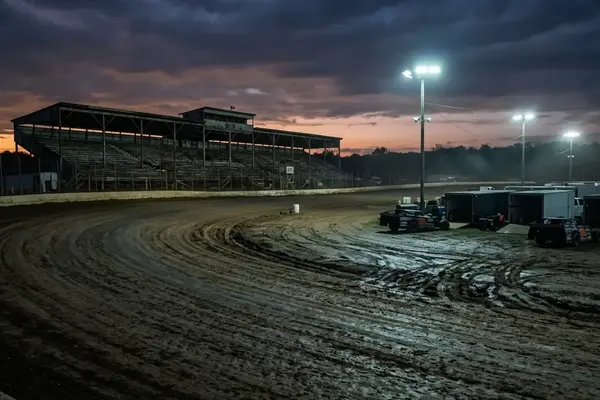
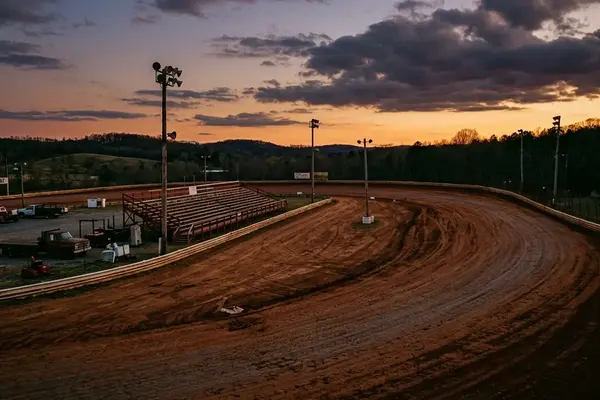
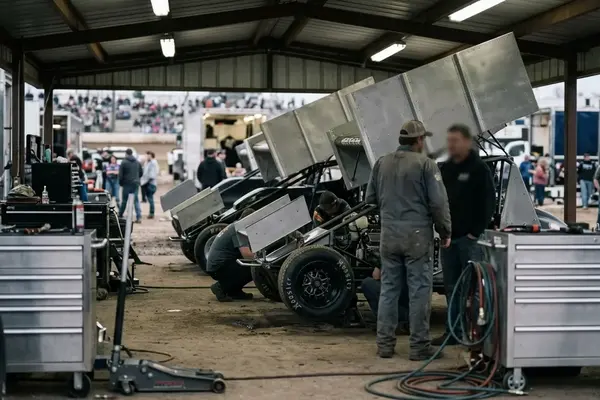
From the grandstand at Rolling Wheels Raceway Park, the center-drive dirt modified silhouette looks nearly identical whether a Big-Block or 358-Modified rolls past. Exposed wheels, sail panels, nerf bars, and that pronounced left-side weight bias blur together at speed.
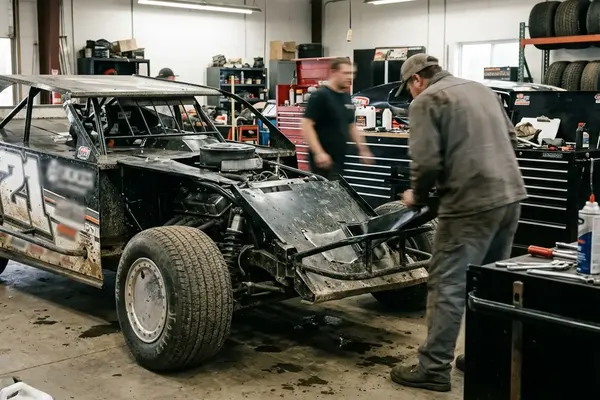
Both classes rely on the same Northeast-style dirt modified chassis with the driver near the centerline. Removable body tin and large rear tires add to the confusion for anyone not studying the engine package up close.
Here’s what separates the two divisions mechanically, financially, and strategically on a fast 5/8-mile oval like ours.
The Heart of the Beast: Engine Specifications
Displacement limits come straight from the rulebook and give the clearest starting point. Big-Block Modifieds run up to 467 cubic inches while 358-Modifieds stay capped at 358 cubic inches.
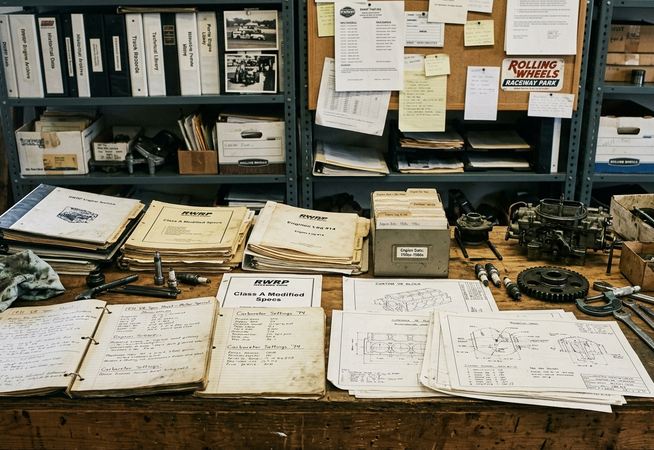
Builders treat the Big-Block as a torque-management package and the 358 as a momentum and rpm package. Camshaft choice, intake selection, and gearing all shift to place the power where each division needs it most rather than chasing a single peak number.
Weight Rules and Chassis Setup
Sanctioning bodies set minimum weights after the race to keep competition tight. Recent Northeast rules place Big-Block cars around 2,500 lb with driver and 358 cars near 2,400 lb with driver, though local tracks can adjust.
The lighter 358 minimum lets crews chase quicker rotation and freer corner entry. Lower torque output means they cannot afford to scrub speed in the middle of the turn the way a Big-Block sometimes can.
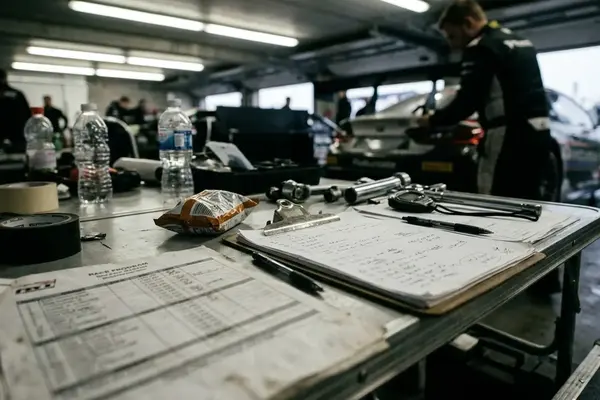
Pit crews scale before hot laps, recheck after heat-race fuel burn, and verify again on the official scales once the feature ends.
Driving Styles and Track Adaptability
Throttle control separates the two packages on track. A Big-Block driver manages throttle to keep the rear tires hooked up through the corner exit. A 358 driver protects momentum by keeping tires rolling and rpm in the sweet spot.
At Rolling Wheels the extra torque lets a Big-Block recover from a small slide and still pull hard down the long straight. On tight bullrings the 358 shines because shorter straights reduce time under full throttle and reward clean rotation instead.
Big-Block lines often favor controlled entry, patient center, and measured throttle off the cushion. 358 lines reward rolling the bottom or middle without pinching and keeping rpm from dropping below the engine’s preferred pull range.
Cost, Maintenance, and Accessibility
A Big-Block program carries higher engine acquisition and refresh costs. Larger displacement parts, higher torque loads, and premium valvetrain components add up quickly in both parts and machine-shop time.
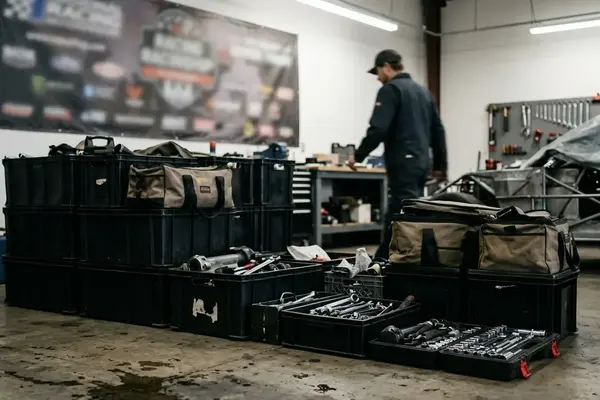
Teams check oil, valve lash, filters, and leak-down on a weekly basis. Major freshen-ups follow race count, rpm history, and oil analysis rather than any fixed calendar.
The 358 division serves as the practical stepping stone. Drivers learn center-drive throttle control, tire management, and traffic discipline without immediately funding the highest-cost engine program.
Which Division Reigns Supreme?
Big-Block Modifieds center on up to 467 cubic inches, heavier minimum weights, and broad torque delivery. 358-Modifieds center on 358 cubic inches, lighter minimum weights, and momentum-based speed.
At a fast track like Rolling Wheels, corner exit and straightaway pull reveal the Big-Block advantage. On smaller, slicker surfaces, entry speed, rotation, and throttle timing show why a 358 can look sharper.
Both divisions demand elite race craft. The Big-Block punishes careless throttle use while the 358 punishes missed momentum and poor corner discipline. Watch both classes closely during your next visit and the distinct character of each becomes clear.