The Golden Era of Northeast Dirt Racing
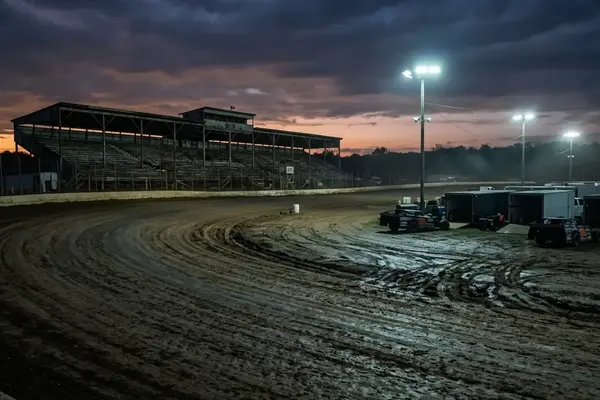
The Rolling Wheels Raceway Park championship archive starts with a hard marker: Modified activity in 1969. Not a campfire story. Not a loose memory from the pit gate. A recorded starting point for the clay on Route 5, where Central New York dirt-track racing built a long, loud record of who could handle speed, cushion, traffic, and pressure.
I look at this list the way I look at a points sheet after a rough feature: class first, year second, context third. That order keeps the legends honest. It also keeps the bench-racing from swallowing the record.
The main championship run covered here runs from 1969 through 2002, with 2007 standing as the final recorded championship entry in this frame. That matters. It means this is not a claim that every season between those endpoints has a clean, complete line in the book. It is a championship-era map, anchored by the records we can name and the divisions they belonged to.

Rolling Wheels was never just another stop. The place acted like a proving ground. The long straights rewarded motor and nerve. The corners punished sloppy entry. A driver could look untouchable for half a race and still lose the handle when the track changed.
That is why these names stick.
They did not just win races. They conquered the clay often enough, or at the right historical moment, to define the championship record.
Criteria for Selection: Understanding the Racing Classes
Before ranking legends, get the class labels right. A Modified title is not the same thing as a 358-Modified title. A Sportsman championship belongs in its own lane. Pro Stock, Street Stock, and Late Model records need the same respect.
How I Read the Championship Record
- Start with recorded Rolling Wheels track championships. Touring-series wins, invitationals, and non-points specials stay outside this tally unless the archive marks them as part of the track-points record.
- Keep each division attached to the achievement. Modified is abbreviated M. Sportsman is abbreviated S. Street Stock is abbreviated ST. Late Model is abbreviated LM.
- Group related classes without merging them. Modified and 358-Modified sit in the same broad open-wheel Modified family, but the 358-Modified class carries the smaller engine-displacement identity.
- Use historical significance as the separator. A first champion, a five-title Modified driver, a multi-class winner, and a final-era champion all tell different parts of the Rolling Wheels story.

Common Mistakes That Muddy the Record
- Counting a 358-Modified result as a standard Modified championship without the archive labeling it that way.
- Blending Pro Stock and Street Stock into one full-fender bucket.
- Treating Sportsman titles as equivalent to premier Modified titles when the historical role of the division is different.
- Calling a driver an all-class leader when the support only proves a division-specific lead.
Warning: Will Cagle belongs in this article as the all-time Modified feature win leader, not as an all-class win leader. The distinction is small in wording and big in meaning.
Close Calls in the Record
When the label is unclear, do not force it. That is the discipline you saw in old-school race communication, the kind associated with Tom Skibinski: DIRT NorthEast PR Director, where the division tag carried real weight. If the record says 358-Modified, write 358-Modified. If it says Modified, write Modified.
Because the archive separates class labels unevenly by era, the safest conclusion is the narrow one: count what the record names, then explain why it matters.
1. Sammy Reakes: The Inaugural 1969 Champion
Start at the start.
August 17, 1969 is the date tied to the first recorded Modified feature event referenced here. That date gives Sammy Reakes his place in this list before any dynasty talk begins. Reakes was the 1969 Modified track champion, and that puts him at the head of the recorded premier-class lineage at Rolling Wheels Raceway Park.
The Timing Matters
Some champions become legends by stacking titles. Others become legends because they set the first mark everyone else chases. Reakes sits in that second lane.
In 1969, the Modified division supplied the premier historical thread for this archive. That is not a throwaway detail. It frames Reakes as more than a name at the top of an old list. He represents the first championship standard for the class that would become the measuring stick at the track.
What to Notice in His Entry
- His title belongs in the Premier Modified category.
- His championship should not be shifted into Sportsman, Pro Stock, Street Stock, or Late Model context.
- His importance is chronological and foundational, not based on a later statistical run.
That last point is where people sometimes overwork the argument. Reakes does not need extra decoration. The record gives him clean authority: first era, first premier-class champion, first line in the Modified championship story.
Bottom line: Sammy Reakes matters because every Rolling Wheels Modified champion after 1969 followed a line that he opened.
2. Will Cagle: The Five-Time Modified Master
Will Cagle is the dominance benchmark.
His Modified championship years are documented as 1973, 1976, 1978, 1979, and 1981. Five Modified championships across an eight-year calendar range is the kind of record that cuts through noise. You do not need to inflate it. You just need to read it correctly.
The Championship Years
- 1973 Modified champion
- 1976 Modified champion
- 1978 Modified champion
- 1979 Modified champion
- 1981 Modified champion
That run says plenty about pace, but it says just as much about repeatability. A dirt track changes by the week. Tires, setup choices, surface moisture, traffic, and restarts all pull at a driver. Cagle kept answering in the premier class.
He also stands as the all-time Modified feature win leader. Keep that phrase tight. Modified feature win leader. That is the supported claim, and it is strong enough without reaching into divisions the record does not assign to him.
How Cagle’s Record Reads
Around the racing community, Cagle’s name still works as shorthand for Modified control at Rolling Wheels. That makes sense. A five-title run in the premier division gives fans an easy reference point.
The class nuance is discipline. Modified success carries different weight from a support-division tally because it sits at the top of the open-wheel ladder in this historical frame. That does not diminish the other classes. It just keeps the structure honest.
My read is simple: Cagle is the clearest dynasty figure on this list. Not because the story needs one, but because the championship years give us one.
Trackside point: When comparing Rolling Wheels champions, separate title count from class strength. Cagle has both in the Modified division, which is why his entry lands so heavily.
3. Alan Johnson: The Multi-Class Phenomenon
Alan Johnson belongs here for versatility. Not as a single-lane dynasty entry. Not as a name to flatten into one grand total. His value comes from adapting across different Modified-related specifications and still finding speed.
That is harder than it sounds from the grandstand.
Modified Versus 358-Modified
The Modified and 358-Modified classes share the open-wheel Modified family feel, but they are not the same label. The 358-Modified class carries the smaller engine-displacement distinction. That changes how a driver thinks about momentum, throttle timing, gear choice, and corner exit.
A premier Modified can reward a different kind of launch. A 358-Modified can make clean rotation and patience feel even more expensive. The driver who wins across those packages is not just brave. He is processing the car.
The Adaptability Test
Johnson’s story works best when you keep the class tags visible. Feature wins and championship references should stay attached to the division the archive identifies. That is the only way his versatility stays real instead of becoming a foggy all-purpose compliment.
Here is the practical lens I use: a multi-class driver has to change habits without losing identity. The steering rhythm changes. Entry loading changes. Throttle forgiveness changes. Yet the driver still has to make the same dirt-track decisions at race speed.
That is Johnson’s lane in this list. He shows the technical side of greatness.
What to Avoid When Telling His Story
- Do not silently count a 358-Modified result as a standard Modified championship.
- Do not treat every open-wheel result as interchangeable.
- Do not bury the technical distinction that makes his versatility impressive.
Some drivers are remembered for owning one division. Johnson’s case is different. He is the reminder that Rolling Wheels rewarded drivers who could read the car, not just the scoreboard.
4. Jimmy Phelps: The Final Era Victor
Jimmy Phelps gives this championship list its closing marker. He was the 2007 Modified champion, and 2007 is the final recorded championship year in this archive frame.
That puts thirty-eight calendar years between the first referenced Modified feature date in 1969 and the final recorded championship year in 2007. The gap is not just a number. It is a snapshot of how dirt Modified racing matured at Rolling Wheels Raceway Park.
The 2007 Context
By 2007, the Modified world looked different from the early recorded era. The cars had moved deeper into purpose-built dirt competition. Chassis thinking had advanced. Safety practices had developed. Setup work had become sharper and more specialized.
Phelps won in that later environment.
That matters because the final-era champion had to master a different version of the same clay problem. The track still demanded commitment, but the tools had changed. A driver had more developed equipment under him and less excuse for missing the setup window.
What to Do With the Contrast
Use it carefully. The point is not that 2007 was automatically tougher than 1969, or that 1969 was somehow simpler in the seat. Dirt racing never works that cleanly. The point is evolution.
- 1969 represents the early recorded Modified era.
- 2007 represents a later period of purpose-built dirt Modified competition.
- Phelps stands as the final recorded Modified champion in this championship frame.
What to Avoid
Do not turn the 2007 entry into proof of an uninterrupted annual championship record from 1969 through 2007. The safer and more accurate wording is this: the main point-championship run used here spans 1969 through 2002, with 2007 as the concluding recorded championship entry.
That wording keeps Phelps where he belongs, at the finish line of this archive frame.
Preserving the Legacy of the Clay
The best championship archives do more than name winners. They protect context.
At Rolling Wheels Raceway Park, that means keeping the 1969-2002 championship run distinct from the concluding 2007 record. It means leaving class labels attached. It means understanding the ladder from Street Stock to Pro Stock, Sportsman, Late Model, 358-Modified, and finally Modified.
Modified remains the premier-class endpoint in this story. Street Stock and Sportsman records still matter, but they serve a different historical role as developmental and support-division context. Pro Stock brings the full-fender piece. Late Model carries its own historical footprint. The 358-Modified division adds the smaller-displacement Modified branch without erasing the premier Modified category.
That is the whole point of doing the list this way.
Sammy Reakes gives us the first premier-class championship marker. Will Cagle gives us the dynasty standard. Alan Johnson gives us the versatility case. Jimmy Phelps gives us the final recorded championship endpoint.
Together, they show the arc of Central New York motorsports on clay: raw early Modified history, concentrated dominance, technical adaptability, and later-era precision. The roar changes. The record stays.
And if you care about dirt racing, that record is worth guarding.