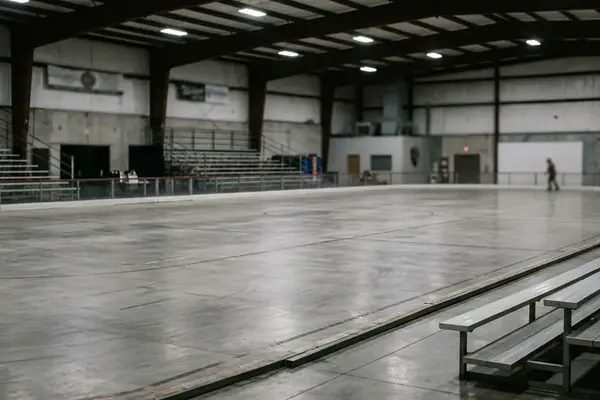
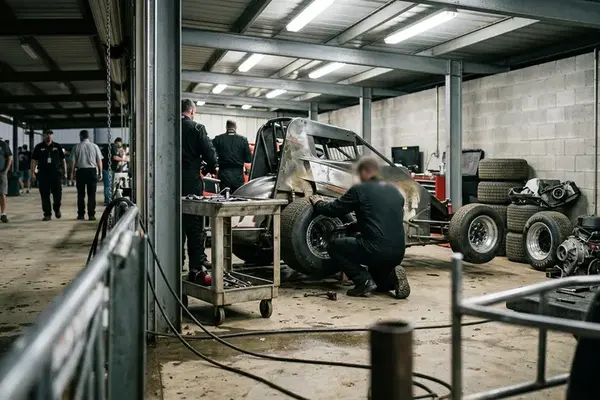
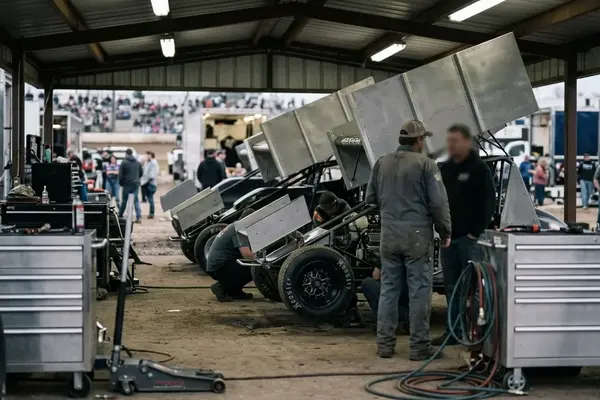
Rolling Wheels Raceway Park runs a five-eighths-mile clay oval. That layout sits apart from the half-mile tracks elsewhere in Central New York. The difference shows up in the car you unload, the gear you choose, and the habits you practice through a long corner.
Entry-level dirt racing here grew along several overlapping routes. Production-based hobby stocks in the 1970s and 1980s gave people an inexpensive way onto the clay. More detailed chassis, engine, and tire rules made inspection more repeatable. Sealed-engine Sportsman competition later opened a direct path into Northeast Modified equipment. Those routes still park side by side on a Saturday race night.
Three Overlapping Routes Onto a Five-Eighths Oval
Hobby-stock racing in that 1970s–1980s window started with production cars. Builders pulled usable shells, kept a lot of the factory structure, and learned how a heavy car behaved once the cushion left. A single introduction date for one local division is beside the point. The cars were cheap enough to bend, and two stocks in the same heat could hide very different hardware under similar fenders.
Inspection sharpened as chassis, engine, and tire language got longer. A tech official could check the same points car after car. That repeatability turned a hobby field into something a driver could plan. Rules still shift across sanctioning eras. The pathway people keep using runs from a stock-clip car, through measured weight and travel, into a purpose-built Northeast dirt Modified frame when the rule package and the budget both say the move is real.
These divisions stay separate local rule packages. Compact drivetrain and tire eligibility, Street Stock frame construction, Sportsman shocks and gearing, and acceptance of a converted Modified all hang on the selected track's dated rules and technical approval. A setup praised in one pit can fail the claim rule at the next oval. Put that scope in the plan before you enter the next race.
What the long corner actually asks of the car
A five-eighths asks for different preparation than a tight bullring. You carry speed through a sweeping turn, so alignment, wheel bearings, cooling, and tire condition decide whether the car late in the feature still matches the car you unloaded. A numerically higher final-drive ratio raises engine speed at the same road speed. On a long straight, ratio selection has to account for tire circumference, the engine speed you can actually use, and the gearing that division permits. Miss one of those three and you either leave the straight short or sit against the rev limiter while the car ahead walks away.
Wake Is a Hint
Aerodynamic wake can affect a following car. Log the same gear, tire, and line before you spend the draft like a measured gain. Until those three match, the tow is a clue you still have to test.
Half-mile tracks in the region reward a sharper rotation and a shorter throttle commitment. Rolling Wheels rewards the driver who protects momentum. Feeder classes exist so you can learn that shape on this clay before the power goes up.
Break the five-eighths-mile learning ladder into three distinct purchases: compact-car momentum practice, stock-frame rear-grip setup, and sealed-602 Modified-chassis experience. Each purchase teaches a different job. Stacking all three ideas into one roller usually means you paid for hardware you cannot use yet.
Low Power, Wide Turns, and a Stock Wheelbase
Four-cylinder compact racing carries the lowest weekly build and maintenance load in the pit area. It also teaches the skill this oval cares about: holding corner speed when you lack horsepower to buy the straight back.
Start with the eligible donor
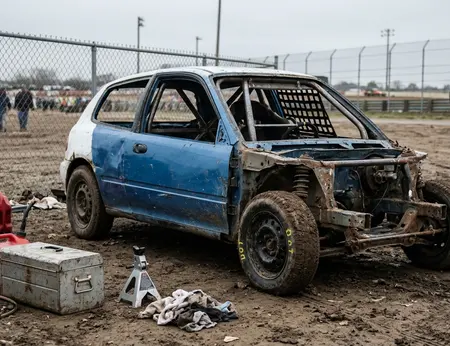
Begin with the division's eligible vehicle and drivetrain definitions. Then judge the shell, the cage installation, and whether service parts still exist in the region. Front-wheel-drive and rear-wheel-drive four-cylinder cars place different demands on the driven tires. Treat them as distinct permitted configurations, and pick the one the rule page names.
On a front-wheel-drive car, the front tires steer and accelerate together. Finish the deceleration you need, establish a smooth arc, and add throttle without forcing the nose wide. A rear-drive compact puts that acceleration load at the rear contact patches. Choosing a shell because the price was low, while skipping the drivetrain definition, builds the wrong car for the class on the entry form.
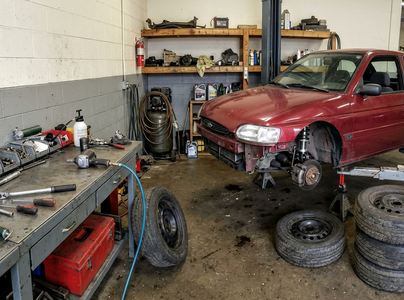
Cage inspection covers tube outside diameter, wall thickness, attachment points, door-bar arrangement, weld quality, and driver clearance. Take those dimensions from the selected division's rulebook. A shop recipe copied from a different compact class will miss a door-bar count or a wall call.
DOT marking identifies a road-tire certification category. Tire model, size, tread treatment, and the other restrictions in the rulebook each need their own look during inspection. The sidewall stamp opens the conversation. The approved list finishes it.
Why the straight punishes a bobble
Momentum loss on a sweeping oval leaves a low-powered car accelerating back toward its previous speed over a substantial portion of the following straightaway. Consistent entry speed and small steering corrections become the lap-by-lap practice. Throttle patience shows up here, in a car that cannot hide a mistake, before anyone sits in high-horsepower equipment.
Seat Time Only
The front-wheel-drive transaxle stops at the compact-class boundary. Suspension attachment points and the body shell stay behind with it. What you keep is driving experience, preparation habits, and some general workshop equipment. Plan the compact as seat time, and plan the part-out when the next purchase starts.
Two misses show up every season. Teams treat a DOT marking as automatic race eligibility, or they assume a cage that looks stout will pass because the welds are shiny. Troubleshooting starts with the rulebook page in your hand. Ask the inspector how they measure wall thickness on painted tube, then fix the car to that method before you haul it again.
Metric Frames, Tubular Clips, and Rear Percentage
The move into rear-drive, full-fendered racing is a chassis conversation. Establish which production frame sections remain. Identify the permitted rear suspension. Scale the assembled car with the driver aboard and a recorded fuel load. Read changes in corner entry, rear grip, and exit behavior against that baseline. A shock adjustment made in isolation will lie to you.
Factory steel versus added tubing
A metric-frame Street Stock commonly retains a production-derived front suspension and frame structure. Pro Stock construction can incorporate purpose-built tubing. Confirm a tubular clip or a coil-over layout on the individual car, and in that class's construction rules, before you treat either one as standard equipment.
Leaf springs help locate the rear axle and support the car. Coil-sprung layouts need separate axle-location links. A coil-over combines a coil spring and a damper. Axle location still comes from the links, the leaves, or whatever locating hardware the rules allow. Rear-steer follows suspension geometry and movement. When the back end steers the car on entry, watch how the axle travels through the corner.
Rear percentage is rear-axle scale weight divided by total scale weight. Record driver position, fuel quantity, tire pressures, and scale-pad level whenever you compare two measurements. Shock rebound controls resistance to suspension extension. Static rear percentage stays where the scales put it. Connecting those scale readings, the suspension travel you can see, and the changing surface grip gives a heavy stock-clip car a credible mechanical explanation when the clay slicks off. Write the readings down. Use them the next time the cushion leaves.
What a pack race actually consumes
Tight pack racing on Central New York clay marks body panels. Long straightaways keep the engine loaded. Tires become a weekly decision. For a useful operating-cost record, have a team log tire purchases, body repairs, cooling-system work, and engine service across 6–10 consecutive race nights.
Six-Night Ledger
Treat that 6–10 night window as your own observation period. Keep the sheet in the trailer and compare it with your earlier nights. Total the costs after the last race night and use the ledger to plan the next tire purchase or repair.
Approved racing tires, whatever designation the current list names, belong on that sheet next to the panel work. A crew that can point at last month's cooling repair and last week's tire purchase already understands the weekly cost of full-fendered racing better than a crew shopping horsepower ads.
A Sealed 602 on Modified Geometry
Crate Sportsman competition in the DIRTcar-style packages common on Northeast dirt is built around a factory-sealed GM 602 crate engine and a purpose-built Modified chassis. The 602 is a nominal 350-cubic-inch small-block crate-engine package. Inspection covers the accepted seals plus the permitted intake, carburetion, ignition, and other external equipment. Document that sealing status before the horsepower talk starts.
Inspect the chassis and suspension first. Northeast Sportsman and Modified cars commonly share purpose-built frame architecture, a solid front axle, and a quick-change rear end. Identify whether the car in the trailer uses torsion bars or coil springs. Those arrangements live on the particular car, and a classified photo hides them.
Tire compound has to match the applicable season's approved tire designation. A gearing choice has to match the actual language governing final-drive ratios or quick-change equipment. A shock package has to match the permitted construction, adjustability, and any price or claim provisions. Those limits are how weekly budgets stay reachable and how feature fields stay full enough to race. They only mean what the posted rule edition says. A shock that cleared a prior sanctioning era can sit outside this season's claim rule.
A Sportsman frame may continue toward 358 competition, and the shared geometry is why teams look at that path. Retaining the chassis for a 358-cubic-inch small-block or a big-block installation can still require changes to mounts, headers, cooling, fuel delivery, clutch or driveline components, ballast, and gearing. You keep a substantial chassis platform. The engine installation and the eligibility still require inspection. A winter swap that only unbolts the 602 and drops in a bigger engine, with mounts, headers, cooling, and gearing left alone, is how cars miss the first feature.
Exposed front wheels leave the front axle, steering links, spindles, and radius rods open to wheel contact. Put those parts on the spare list beside rod ends and bearings. Talk about the hardware you will actually replace after contact. Skip any crash-cost comparison you cannot pull from your own nights.
Walk Tech Before You Buy the Roller
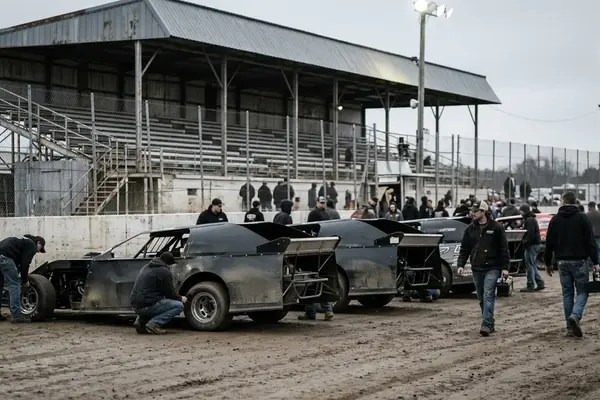
The useful move, before a deposit, is to obtain the rulebook for the season you intend to race and arrange access to an operating track's inspection area with its officials. Buy the pit pass. Walk the line while cars are actually being checked. Have the technical inspector point at the construction and eligibility provisions for your division, then hold the proposed roller up against those provisions.
A car advertised as legal under 2024–2025 rules carries a dated claim. Obtain the actual rule edition named in that ad and compare it with the intended season's requirements. Track & visitor info on the Rolling Wheels site, plus the events & schedule, will show when tech is open. The rulebook shows what that session is checking.
What to verify on the pit walk
Record any chassis serial tag and the manufacturer identification, then compare the car's construction with its paperwork. The tag starts that comparison. Eligibility and structural condition come from the match between the car, the paperwork, and the rule edition in force for your season.
Cage-tube wall thickness stays hidden under paint. Ask which measurement method the inspector accepts, and how inaccessible or repaired tubing will be evaluated. I still open that conversation on the cage page, because a fresh coat of paint has cleared more bad tube in a sales pitch than any classified ad ever has.
Compare tire sidewall identifiers and compound markings with the approved list. Inspect wheel dimensions and beadlock permission on their own line. A legal tire on a wheel the rules reject still fails the car.
Three Crews, Separate Notes
Talk to three mid-pack teams. Ask each one about its last 4–8 race nights. Separate collision damage from routine items: tires, rod ends, bearings, and fluids. Keep each answer as that crew's account. Budget from those three conversations, and leave a class-wide average out of the spreadsheet.
Shop, trailer, opening night
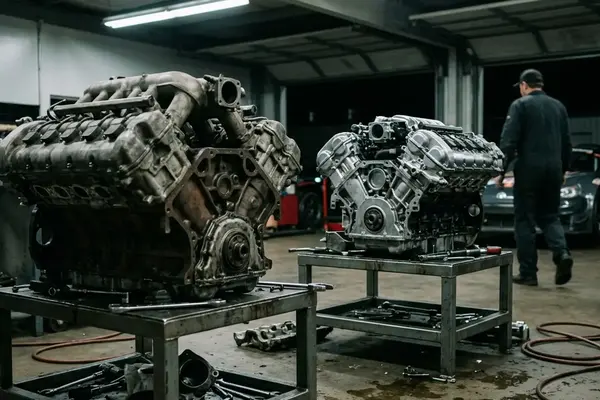
Give the machine shop the engine identity, the sealing requirements, and the service work you actually intend. A sealed 602 has a different service conversation than a stock-clip engine the shop can open. Hand them the rule page, not a guess from the pit rumor.
Measure overall car width, trailer opening, ramp clearance, and loading geometry. Check actual loaded weight against trailer, axle, tire, and tow-vehicle ratings. A Crate Sportsman or Street Stock roller that cleared tech and still will not fit the trailer, or that overloads the tow vehicle, misses the first green on the events & schedule.
Download this season's division rulebook today. Buy a pit pass for the next tech session at Rolling Wheels Raceway Park. Walk the used Crate Sportsman or Street Stock roller with the inspector, the serial tag, the tire stampings, and three mid-pack spare-parts stories in hand. Then book the machine shop and measure the trailer so the car you inspected is the car that makes opening night.