Contents
- Dust, Drama, and Dirt-Track Glory
- A-Main Feature: Key Race Highlights
- Official Top 10 Final Standings
- Championship Points Impact and Scope
- Looking Ahead on the Dirt-Track Schedule
Dust, Drama, and Dirt-Track Glory
The race-night frame
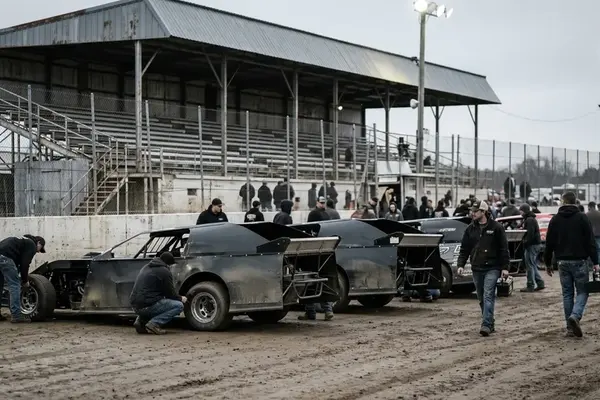
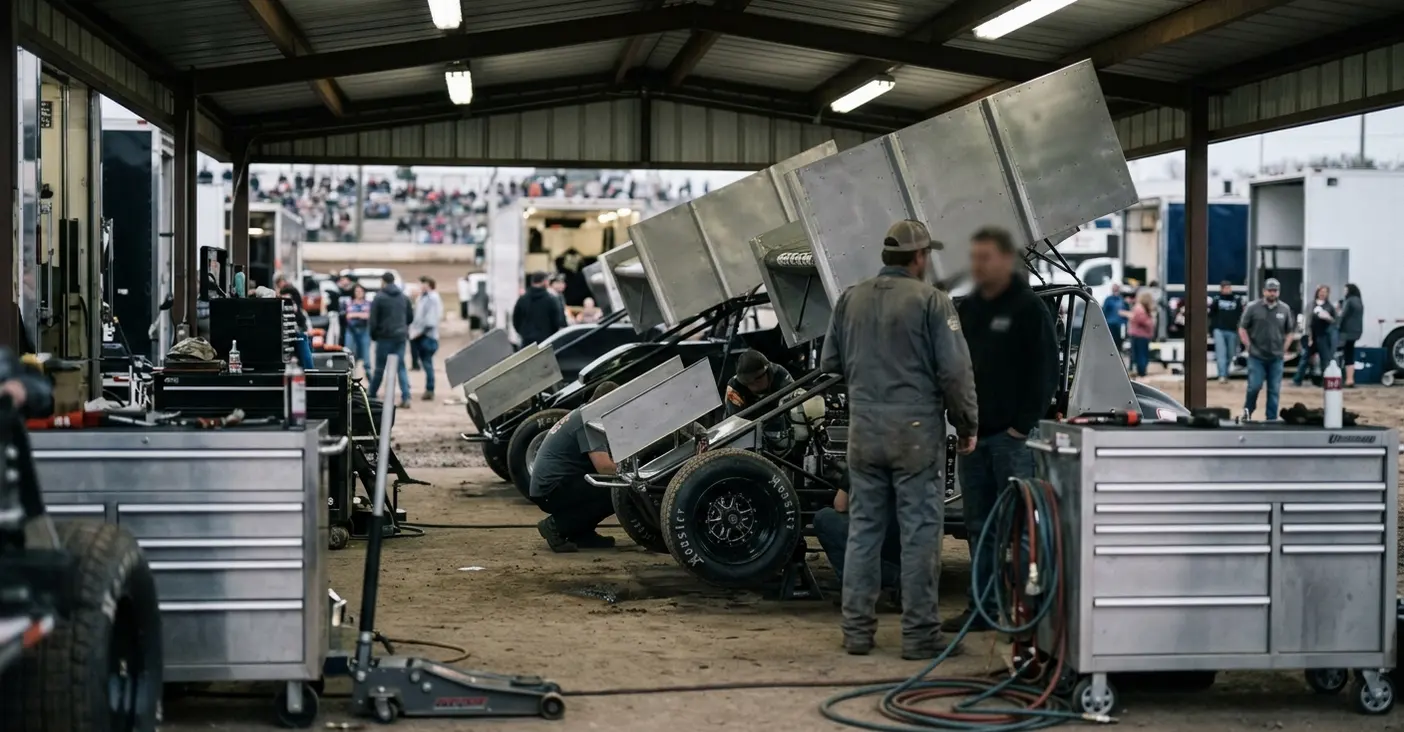
Rolling Wheels Raceway Park had the right kind of pulse for a World of Outlaws Sprint Car Showdown: clay under load, 410-cubic-inch winged sprint cars in the pit area, and a crowd that let the field know it was watching.
The sanctioned sprint-car program was completed. That matters. From the race-day operating window that starts around pit opening and runs through the A-Main checkered flag, the whole operation has to stay tight: race control, the flagstand, safety crew, pit stewards, push trucks, and electronic scoring all working in the same rhythm.
The surface prep started long before the first green. The clay oval was watered, packed, and groomed before hot laps, which is the quiet labor fans only notice when it is missing. On a good night, that work gives drivers a surface they can attack without turning the show into survival laps too early.
Race-night takeaway: A clean recap starts with confirmed race-night observations, not garage-area chatter. The program ran, the clay was prepared for competition, and the crowd response was visible and audible from the grandstand side.
Why this recap stays measured
Dirt-track results carry heat. They should.
But a final standings recap has to respect the scorer’s sheet. The checkered flag tells the crowd who crossed first; the official posting tells the archive what actually counts. That distinction protects the drivers, the teams, and every fan checking the results the next morning from Route 5 or from a long tow back across Central New York.
Regulars who follow 358-Modified nights already know the pattern. The loudest story is not always the most accurate one. A good recap catches the roar, then ties it back to race control.
A-Main Feature: Key Race Highlights
How the track changed through the night
During practice, the surface read like a typical freshly prepared clay oval: moisture-heavy enough to reward commitment, with enough bite to let drivers lean on the right rear and keep the car loaded. That early tack matters because it shapes qualifying balance and heat-race confidence.
Through the heat races, the lanes usually start to widen if traffic, weather, and prep all cooperate. The cushion builds where the outside line gets used. The bottom can stay useful if moisture hangs in the groove. The middle becomes the test lane for drivers willing to adjust their entry speed instead of simply chasing the wall.
The A-Main description should only call the track slick, rubbered, or abrasive if the surface actually developed that way. Community observation suggests fans often reach for those words as shorthand, but the lap chart and scorer notes give the better backbone. If the lane widened, say that. If the bottom locked down, say that. If the cushion stayed fast, give the cushion its credit.
Slide jobs, cushion speed, and momentum swings
The A-Main highlight sequence belongs in race chronology. Start with the initial launch, note the first serious pressure for the lead, then track each momentum change through cautions, restarts, traffic, and mechanical trouble.
- Lead battles: Log the lap where a leader came under pressure, then describe the move. A clean slide job has a different meaning than a desperate throw across the nose.
- Cushion-riding: Watch whether the driver gained speed by keeping the right rear planted on the berm or lost time by bouncing the car over it.
- Traffic: In sprint cars, lapped traffic can turn a comfortable lead into a one-corner knife fight. The recap should show where traffic changed the pace.
- Restarts: Note who fired clean, who protected the bottom, and who used clean air to stretch the field.
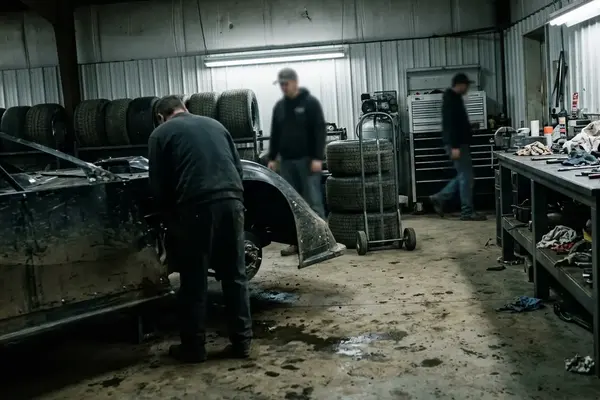
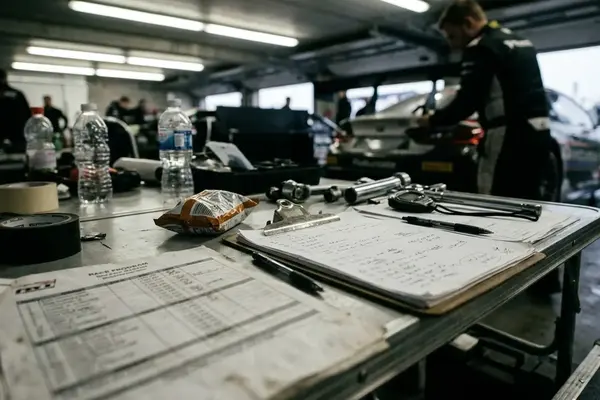
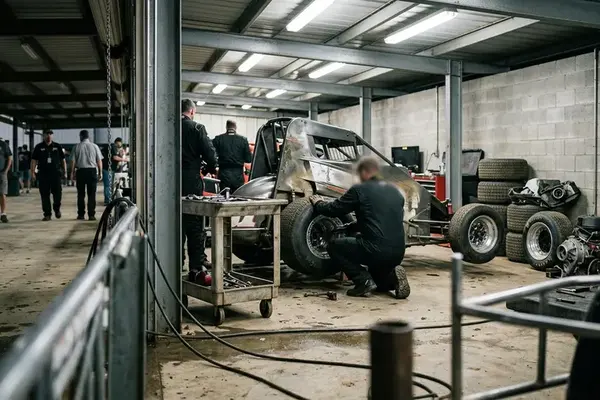
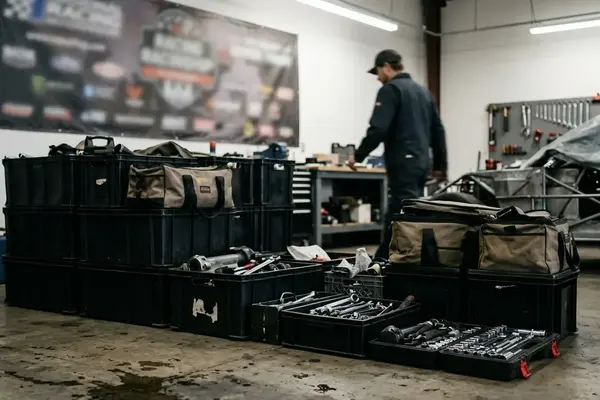
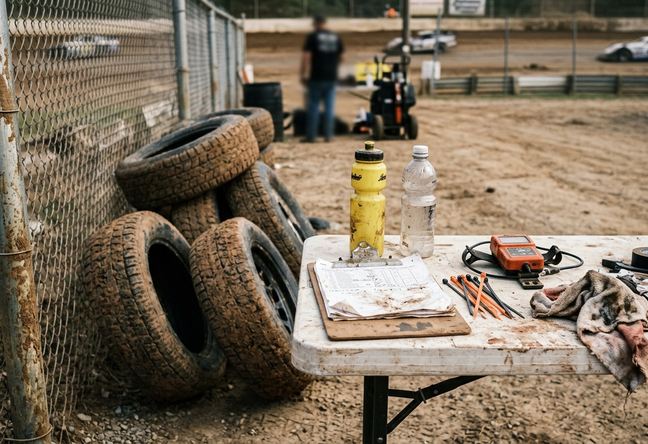
Pit-crew adjustments deserve mention when they can be defended from the timing of the program. Between heat-race completion and A-Main staging, teams commonly work on stagger, wing angle, tire pressure, shock settings, gear choice, and torsion-bar decisions. Those changes do not need guesswork attached. If the crew made an adjustment in plain view or the driver confirmed it, it belongs. If not, leave it out.
Scoring reminder: Do not record lead-change laps, caution laps, red-flag stoppages, DNS entries, DNF entries, or mechanical attrition from memory. Use the official race report, race-control log, scorer notes, or lap chart.
When a caution changes the race
A caution is not just a yellow light in the recap. It resets tire temperature, wing balance, fuel rhythm, and driver patience.
If a major caution or red flag shifted the A-Main, the useful question is simple: what changed after the restart? Maybe the leader lost clean air. Maybe a second-place car found a better angle into turn one. Maybe mechanical attrition took a strong top-ten runner out of the fight. The recap should name the change only when the official log supports it.
Official Top 10 Final Standings
The official posting comes first
The Top 10 is final only after the official scorer posts the A-Main result sheet and the electronic transponder output has been checked against the manual backup or lap chart. That is not red tape. That is how a race archive stays trustworthy after the noise fades.
For this Showdown recap, the standings block should include finishing position, driver name, car number, and starting position when those fields appear on the official result sheet. Without that posted sheet in hand, naming drivers would turn a results recap into a rumor column. That is not the standard Rolling Wheels Raceway Park owes its fans or teams.
How the podium story should be written
The podium rundown should stay qualitative but specific. The winner’s path to the front should explain where the race was taken: clean air, restart execution, traffic management, a decisive slide job, or consistent cushion speed. The runner-up note should show whether the challenge came early, late, or in traffic. The third-place note should not be treated as a leftover; a podium in a World of Outlaws field usually requires pace, discipline, and a car that stays alive under pressure.
That conclusion only holds when the final order has cleared scoring review, because a protest, penalty, or corrected transponder read can change the podium and the points language that follows.
Hard Charger calculation
The Hard Charger is the easiest award to get wrong when the room is loud.
- Start with the official A-Main lineup, not the originally announced lineup.
- Reflect provisional starters, lineup penalties, scratches, and DNS entries before calculating movement.
- Subtract finishing position from starting position.
- Compare all eligible drivers using the same corrected starting grid.
- Name the Hard Charger only after race control marks the result official.
The common failure case is simple: someone remembers a driver starting deep, but a scratched car or penalty changed the official starting position. The math then changes. The award has to follow the sheet, not the memory.
Archive tip: Keep the original post time when publishing results. If the archive is revised later, add a correction timestamp rather than silently changing the order.
The fight inside the Top 10
The best Top 10 notes do not read like a roll call. They show how fierce the middle of the finishing order became once the leaders reached traffic and the preferred lane narrowed. A driver holding eighth with a wounded right rear may have raced just as hard as the winner; the recap should still keep the spotlight proportional to the official finish.
This is where Central New York race fans bring sharp eyes. They remember who passed cleanly, who protected equipment, and who raced like the next restart was the last one.
Championship Points Impact and Scope
What one Showdown can influence
A World of Outlaws feature can affect more than the win column. Depending on the current points rules, one night can influence feature-start credit, finishing points, top-five count, top-ten count, win count, and tiebreaker position. The correct comparison window is narrow: the standings snapshot immediately before race week against the first official post-race standings bulletin after the event.
For rules context, the World of Outlaws official rulebook and historical archives remain the source to check before making a strong championship statement.
Rules and points sources
This is not about paperwork, but the verification habit is similar: use the sanctioning body’s points rules, the pre-race standings from the same source, and the first official post-race bulletin. Mixing sources can create false movement, especially when one page updates faster than another.
A one-night recap can explain directional championship movement. It cannot settle season-long form while remaining races, penalties, provisional starts, rain-shortened procedures, or appeal decisions are still unresolved.
The equipment trade-off
The championship question in a sprint car is never just, “Can the driver send it?” The better question is, “What does the move cost?”
A driver chasing a win may have to throw a slide job into dirty air, lean harder on the cushion, burn the tire, carry a different fuel load balance, or flatten the wing enough to gain straightaway speed while giving up security in the corner. A points racer still has to race. Protecting equipment too early can hand away track position, but tearing up a car for one spot can punish the whole crew long after the hauler leaves Rolling Wheels Raceway Park.
That tension is what makes the Showdown count. The field is not only racing the car ahead. It is racing the calendar.
Looking Ahead on the Dirt-Track Schedule
What made the Showdown work
The Showdown succeeded because a race night is bigger than the feature winner. Track prep crew, race officials, push-truck teams, safety workers, pit staff, concessions, ticketing, drivers, crews, and fans all had a hand in getting the program from pit opening to the A-Main checkered flag.
That community effort matters in Northeast motorsports. Fans travel Route 5, teams tow from across the region, and local volunteers keep the small details moving so the big moments can happen under the lights.
Not every fan needs a Tom Skibinski: DIRT NorthEast PR Director level of notebook discipline to enjoy the night. But the archive should be built with that kind of care.
Archive work after the checkered flag
The post-race job is not done when the grandstands empty. When possible, the official results page should go live within roughly 1-3 business days, with the scoring sheet or HTML result table attached. Photo-gallery links can follow, and any later race-control revision should receive a visible correction notice.
- Publish the official A-Main result sheet after scoring review.
- Attach or transcribe the Top 10 with finishing position, driver name, car number, and starting position where available.
- Mark DNS and DNF entries only from the official report.
- Update the archive if race control revises the order.
- Keep the original post time and add a correction timestamp when needed.
The next sprint-car date
The next major sprint-car event should be previewed only with calendar-confirmed fields: venue, date, division, gate time, hot-lap time, and ticket or pit-pass availability status. If any of those pieces are not confirmed, the clean move is to say so and wait.
For now, the Showdown leaves the right kind of mark: a completed sanctioned program, a prepared clay oval, a lively crowd, and another night of Central New York dirt-track racing that gave fans something to talk about all the way home.