The margin between glory and heartbreak on the dirt
At Rolling Wheels Raceway Park, the final lap can turn on a patch of grip that lasts only long enough for one car to use it. Miss that change in the track and you miss the decision that separates a second-place finish from a victory.
A close finish takes momentum, tire grip and a choice made under pressure. The leader protects a line; the trailing driver looks for drive off the corner. Both reach the front stretch with little room left to change course.
Building a definitive countdown from No. 10 to No. 1 requires rock-solid race records. Without verified driver pairings, dates, or margins, calling any finish the closest in Rolling Wheels history turns an exciting story into a guess. The open places below show what each entry must establish before it belongs in a historical ranking.
Early finishes need more than a flag-stand call
Start the lower end of the countdown with contemporary results. They can establish who won and who finished second. To explain why they finished together, find the race account as well. A close-looking flag-stand decision and a measured margin answer different questions.
- No. 10: Find the race date, division, winner and runner-up. Check whether the result supplies a measured gap or only the finishing order before assigning this place.
- No. 9: Check the report from the white flag onward. If lapped traffic appears in the account, identify where the leaders met it and which line each driver took.
- No. 8: Establish how officials judged the finish. Keep a visual flag-stand call in its original terms rather than translating it into a decimal-second margin.
Earlier track records relied heavily on eyes at the flag stand before modern electronic transponders. That matters when comparing eras. Lapped cars can compress a fight for the lead, but they belong in an individual finish account only when the account places them there. It is better to leave a vivid last-lap detail out than attach it to the wrong race.
Sprint cars carry their challenge off turn four
Watch a sprint car leave the high cushion and the appeal of a late charge becomes clear. Speed carried through turn four can give a trailing driver a run along the front stretch. Whether that run reached the leader before the stripe is a question for a particular race report or finish image, not for the shape of the track alone.
- No. 7: Identify the open-wheel division and both drivers, then trace their lines through turn four. Record the margin only in the form the result provides.
- No. 6: Look for an account of the cars alongside each other on the front stretch. A photograph at the stripe can help establish position; it cannot, by itself, supply an elapsed-time gap.
- No. 5: Connect the final-corner move to the official result. If the report ends before the checkered flag, leave the missing part of the maneuver undescribed.
That sequence gives a sprint car finish its force: corner exit, acceleration, then the stripe. It also gives the archive a clear test. The recorded result and the last-lap account must describe the same race.
Big-Block Modifieds demand a closer look at the stripe
A Big-Block Modified battle can look fierce from the grandstand. Two cars filling the front stretch may invite talk of rubbing rails, a slide job or a horsepower contest. Each description makes a distinct claim about what happened. Check it against contemporary reporting before putting it into a countdown.
- No. 4: Establish the Big-Block Modified pairing and recorded gap first. Then locate the decisive move: corner entry, corner exit or the run along the straight.
- No. 3: Determine whether the account actually reports a slide job or contact. Side-by-side cars at the finish are evidence of a close finish, not evidence that they touched.
- No. 2: State whether the gap is a time, a distance or simply an official order. Compare it with other entries only when their measurements support that comparison.
Division labels matter too. A 358-Modified result belongs under its own division, even when its finish provides a useful comparison with a Big-Block Modified race. Keeping those records separate makes the eventual ranking easier to check and the racing easier to appreciate.
The closest Rolling Wheels finish remains an open entry
No. 1 needs the strongest evidence in the countdown. Name the date, division, winner and runner-up; give the documented winning margin; then compare it with the other verified margins on the same basis. Without those records at hand, establishing a definitive track record remains an ongoing project for historians.
The last-lap story needs its own proof. Follow the leaders from the white flag to the finish using a contemporary race report, a finish image or another record of that race. Pin down where the winner began the move, whether the cars ran alongside each other and what happened at the stripe. A result sheet can settle the order while leaving those questions open.
Once those records agree, the narrowest finish will earn its place for a solid reason: readers can see both the measured gap and the driving that produced it. Until then, an empty No. 1 is more useful than an invented benchmark.
Read the grooves before the white flag
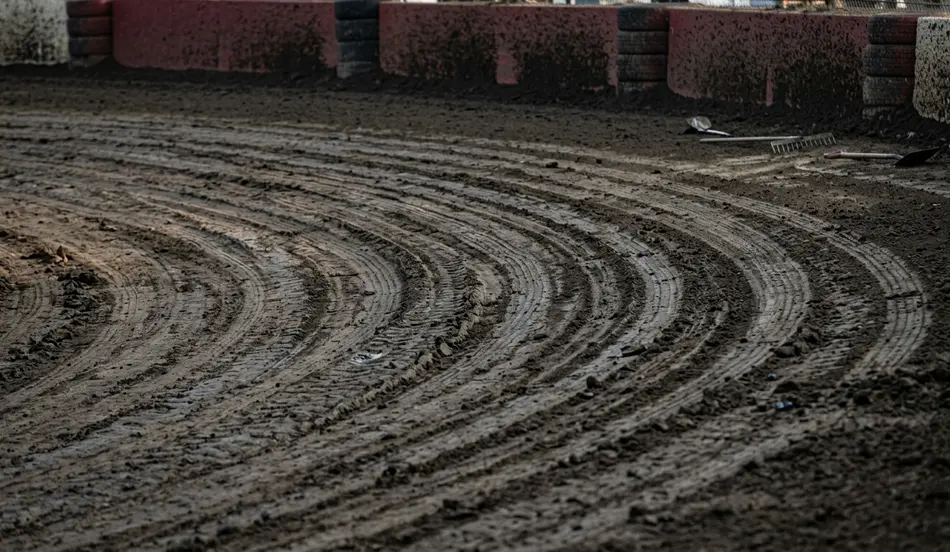
You can still spot the conditions for a close finish from the stands. Over the final five laps of a feature, watch where damp dirt remains and where the high cushion begins to dry. Compare the leader’s line with the trailing driver’s entry into each corner.
If the trailing car leaves that drying cushion for the bottom groove, follow it through the next turn. A slide-job attempt hinges on whether it clears the leader and whether either car can drive cleanly off the corner toward the stripe. The first move may draw the crowd’s attention; the exit decides whether the challenge lasts.
On the next feature, watch the moisture shift over the final five laps, then follow any trailing driver who drops from the high cushion to the bottom all the way back to the finish line.